
Quick Nav
- What a Bad Call on the Lot Costs the Season
- Why a Lean Trunk Can Still Be the Tree They Remember
- The Three Checks That Keep a Child's Pick Workable
- Hand Them the Rows, Keep the Fence Yourself
- Name the Tree First, Then Run the Three Checks
What a Bad Call on the Lot Costs the Season
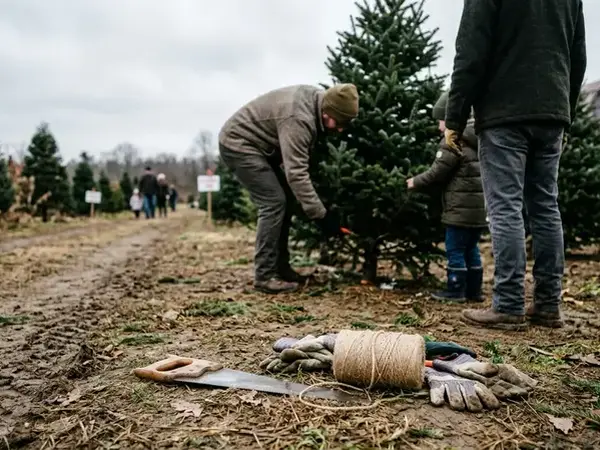
Picture the moment. A child stops at a tree with a trunk that leans like it is waving and says, "This one." An adult glances at it, frowns, and points to a straighter tree two rows over. The family goes home with the straighter tree. From that point on, the season's story belongs to the adult's taste. The child has no tree left to point at and say they found it.
The opposite mistake costs something too. If the adults wave through the child's favorite without checking ceiling clearance, needle condition, or how the tree will ride home, that same favorite can scrape plaster on the way in, shed onto the floor before guests arrive, or shift in the vehicle on the drive back.
So there are two ways to lose, and both happen on the lot.
The gain is worth stating plainly. Done well, the family ends up with a tree the child still recognizes as theirs once it is standing in the corner. Its odd shape was kept. The practical failures were caught before the saw came out. Everything in this walkthrough serves that one outcome.
Start at home. Before the visit, I identify the corner where the tree will stand and look at what surrounds it: nearby stairs, doorways, and the space a ceiling fan sweeps when it runs. That corner decides more than any conversation in the field will.
Why a Lean Trunk Can Still Be the Tree They Remember
Symmetry is a habit of the sales shed. A family tree can do without it. A lean trunk, a flat side from a crowded row, or a gap where a branch never filled in often vanishes once the tree is turned toward a wall and the lights go on.
What children keep, years later, is the reason they stopped walking. A trunk that looked like it waved. A low pocket just the right size for a small ornament. A top that refused to be a perfect spear. Those details are the memory.
So ask the question before you judge the outline: what made you stop at this one? The answer gives the adult something specific to protect. Then the adult can think about the room. A flat side can face the wall while the child's favorite branch or bend faces into the room, where everyone can see it.
Irregular outline versus a mounting problem
These are two separate questions, and it helps to keep them apart. An irregular outline is a matter of looks. A mounting problem is mechanical. Inspect the lower trunk and ask whether it can be secured in your household's stand without cutting away the very feature the child chose. If the lean starts high in the tree and the base sits straight, the shape is usually a matter of positioning. If the bend runs right down into the butt, look harder before you commit.
What the rows themselves are telling you
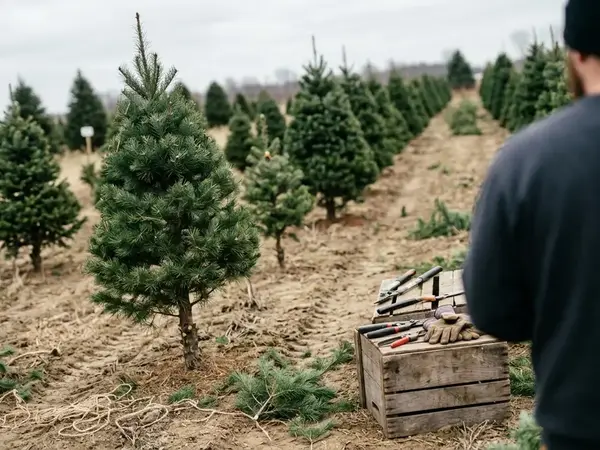
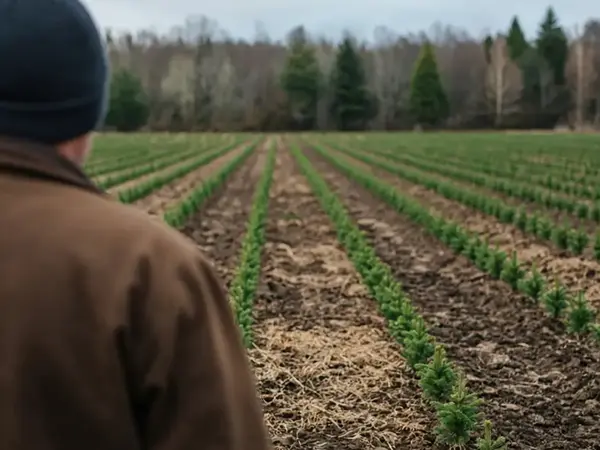
On an Illinois choose-and-cut farm, field-grown trees come out uneven because weather, spacing, and shearing all leave their marks. That variation is the reason families walk the rows at all instead of taking the first baled tree by the shed. Farm heritage lives in that working-field character. At Oney's Tree Farm & Nursery, a block of Balsam fir can look thin one season and full the next, and the people tending it usually know why. If a block looks sparse, ask them what shaped it this year rather than assuming the trees there are discounted or defective.
The Three Checks That Keep a Child's Pick Workable
Three decisions, made in order: does the tree fit the room, is the foliage in suitable condition, and can it travel securely. Nothing else needs an adult veto.
Check one: size
- At home, measure from floor to ceiling in the chosen corner.
- Subtract the stand's actual installed lift, meaning how far it raises the trunk once the tree is seated.
- Subtract the height of the topper you really use.
- Note the trunk diameter your stand accepts.
- Write the resulting height allowance down and bring it.
A tree that looks right in an open field can block a stair, hit a fan blade, or leave no room for the stand. The field gives you very few reliable references for indoor scale, so trust the written number over your eye.
Check two: freshness
Gently run a hand along an outer branch. The needles should flex and stay attached. They should not shower onto your sleeve. Loose older needles caught inside the canopy are a different observation from brittle outer foliage coming away under a light hand, so judge by the outside of the branch.
One correction to a common hope: a fresh cut at the butt exposes wood so the tree can take up water. It does not reverse a tree that was already dry on the lot.

If a crew member says the trees were "cut this morning," that describes that day's batch, which may or may not include the tree in front of you. Ask whether they mean felling or baling, and whether the answer covers this particular tree or row. Treat it as useful information for this visit and keep running your own hand check.
When the Needles Rain Down
If needles snap off in a cloud, put that tree back, even if your child loves the shape. Then say the failed check out loud: "The needles didn't pass." That keeps the limit about the tree's condition and leaves your child's taste untouched. Their reason for choosing it still counts, and they get to name another one.
Check three: the ride home
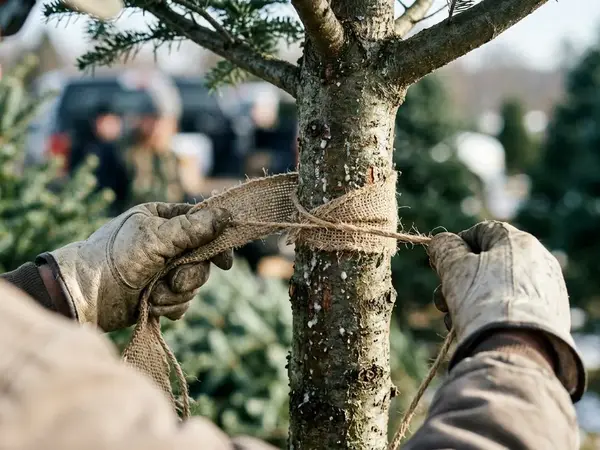
The tree must be secured so it cannot slide, roll, or push into the passenger space. Brake lights, the license plate, and the driver's necessary view all stay unobstructed.
Settle species before entering the rows too. Use your household's own experience with fir or pine in a heated room; the two do not behave identically, and a past disappointment is good evidence.
Hand Them the Rows, Keep the Fence Yourself
The fence goes up in the parking area, before anyone sees the first pretty tree. Three posts hold it:
- Maximum height, taken from the written number.
- Species already ruled in or out.
- Price band. Ask first whether the farm charges per tree or by measured height, since that changes the band.
Inside that fence, the child chooses. Adults do not steer them back to the symmetrical row. Nobody offers the "better" tree three times. Keep the height card in a pocket while walking, and use it.
Matching the method to the child's age
Age changes how a child chooses. It does not change whether they get a say. A toddler points among trees that already sit inside the height band; the adult has quietly done the filtering. An older child can walk a short comparison of two or three candidates and explain why one tree wins.
Two children, one tree
Let each child champion a tree that passes the checks. Any genuine failure should be named for what it is: too tall, brittle shedding foliage, or a transport fit that will not hold. Then return both children to the same agreed area. The fence stays the same for everyone, which is what makes it feel fair rather than arbitrary.
Name the Tree First, Then Run the Three Checks
The handoff itself is simple. The child names the tree. The adults enforce clearance, freshness, and the ride.
On the lot, the child leads through the first trees that fit the height band and stops at the one they refuse to walk past. They say its name, or their reason, out loud before any adult offers an opinion. Only then do the checks begin.
A worked pass
A Scotch pine with a lean and one flat side. It fits the written allowance. Under a gentle hand, the outer needles flex and stay put. It can be secured in the truck bed with the tailgate closed and the lights clear. Approve that tree, lean and all.
A worked fail
A named candidate showers brittle outer needles, or it cannot be tied down without covering a brake light. Name the failed check, keep the child's reason for loving it in the conversation, and let them name another candidate inside the same height band.
One last step catches what the foliage check cannot. Once the tree is loaded, walk around the vehicle and recheck the restraint and the sight lines before it moves.
For your next visit, do this before you park: write the maximum height on a card, decide whether the tree rides inside, on the roof, or in a truck bed, and confirm you either have ties with you or the farm will tie it. Hand your child the card to hold as you walk to the first row.