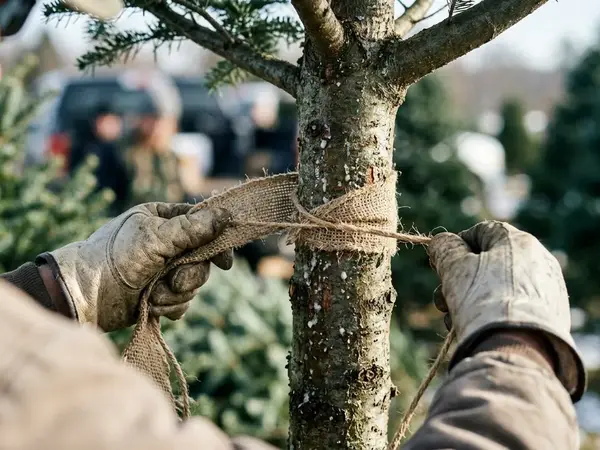

A Christmas tree crop is a block of ground held in production for years at a stretch — seedlings lined out in rows, mowed and scouted through each growing season, sheared once a year, and cut only when the height and outline are right. The work starts when someone walks a block with a shovel and a fistful of marking flags, decides which way the rows will run, and sets seedlings with their roots pointed down instead of folded into the hole. Everything a family sees on a sales weekend at Oney's Tree Farm & Nursery is the visible end of decisions made in seasons nobody photographed.
Quick Nav
- The Cycle Runs From Lined-Out Stock to a Netted Tree
- Marking Wet Pockets Before the First Seedling Goes In
- Mowing, Scouting, and the Annual Shear
- Who Walks the Rows in July and Who Shows Up in December
- Tractors, Wagons, and the Chute at the End of the Lane
- What the Price Tag Has to Carry
- Reading a Harvested Block: Replant or Rest
- Walk an Aisle Before You Pick a Saw
The Cycle Runs From Lined-Out Stock to a Netted Tree
The operating cycle opens when planting stock is assigned to a prepared block and lined out in rows. From that morning forward, the same set of recurring questions returns every season: weed control, mowing, leader growth, shearing, which trees get replaced, which rows get harvested first, and whether a given tree leaves the farm from the stump or through a lot.
A block stays inside that cycle even during years when its trees are far too small to sell. That point surprises visitors. Ground carrying knee-high seedlings is still occupied, still mowed, still scouted, and still costing labor.
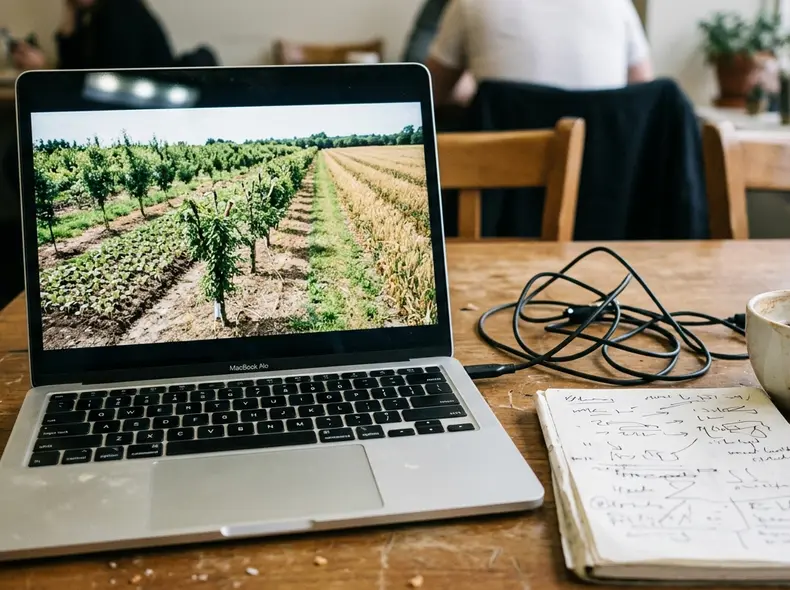
Walk the farm in any season and three stages are visible at once. New rows with short seedlings and obvious bare ground. Mid-growth blocks where repeated shear cuts have already built a dense, controlled outline. Harvest rows where sale-sized trees stand with enough aisle room for a saw, a wagon, and a family that brought a toddler along.
Marking Wet Pockets Before the First Seedling Goes In
Planting density is a compromise, and the compromise is settled on foot. Before stock goes in, the grower walks the proposed block and marks the wet pockets, the slope changes, the turning space at the ends, and the route equipment will take. Row direction and aisle width then get chosen together, because each tree needs light and moving air while the crew needs a path for mowing and shearing that does not brush every neighboring leader on the way past.
On sloping ground in McHenry County, rows often follow the contour or another erosion-conscious line rather than the shortest run across the parcel. The shortest line is rarely the line that holds soil.
Low areas that hold water after spring rain get bypassed, drained, or assigned to something other than seedlings. Saturated soil damages young roots, and a balsam fir set into a spring puddle rarely gets a second chance.
Spotting A Tended Block
A maintained young block reads clearly from the aisle: visible row logic, open lanes, seedlings standing upright, and gaps you can actually identify as gaps. When weeds have swallowed the seedlings and blank spaces sit unmarked, maintenance has slipped behind the calendar.
Mowing, Scouting, and the Annual Shear
Between planting and harvest, the work is quiet and repetitive, and it is the part that decides tree quality. The crew reads each block several times across the growing season.
- Mowing. The decision follows aisle height and field access. Tall aisles hide holes, stumps, and lower trunks; mowed aisles expose them.
- Scouting. Summer checks separate uniform heat or drought stress from isolated trouble: a dead leader, a browsed shoot, webbing, scale-like deposits, discoloration concentrated on one side of a tree.
- Shearing. The annual cut waits until the season's new growth is developed enough to judge. Each pass balances a straight leader, branch density, and room for the tree to add another layer next year.
Fresh shear work leaves clipped twig ends and a deliberate outline. Later growth softens those cuts but keeps the spacing decision that was made that season, which is why a missed pass shows up years later as the hole a family notices at eye level in the living room.
A severe dry spell rearranges the whole plan. It can force watering where that is practical, delay shaping work until growth recovers, or lead to replacement planting once survival has been assessed.
Readiness and replanting dates belong to the species, soil, drainage, and weather of a particular Illinois block. What holds on one well-drained rise does not convert into a statewide age schedule for every row in the county.
Who Walks the Rows in July and Who Shows Up in December
For most of the year a small crew can spread inspections and mowing across the blocks at a workable pace. Shearing compresses attention into the window when new growth is ready. Holiday sales compress cutting, hauling, parking, checkout, netting, and a steady stream of customer questions into the same open hours.
The physical work is honest about what it asks. Shearing means repeated reaching and stooping in tight rows, with knives or hand shears kept clear of the supporting hand and the legs. Brush and clipped growth have to come out of the aisles, where they otherwise hide holes, tangle feet, or wrap around mowing equipment.
Experience here is built from repetition rather than titles. People who have worked these fields for several seasons know where footing stays wet into June, which rows snag a jacket sleeve, and how much leader a given block will push in a wet year. On a December Saturday, the same field hand may go from saw work and dragging a tree to running the netting chute, loading a hatchback, directing traffic, and greeting an arriving family, all inside a few minutes.
Tractors, Wagons, and the Chute at the End of the Lane
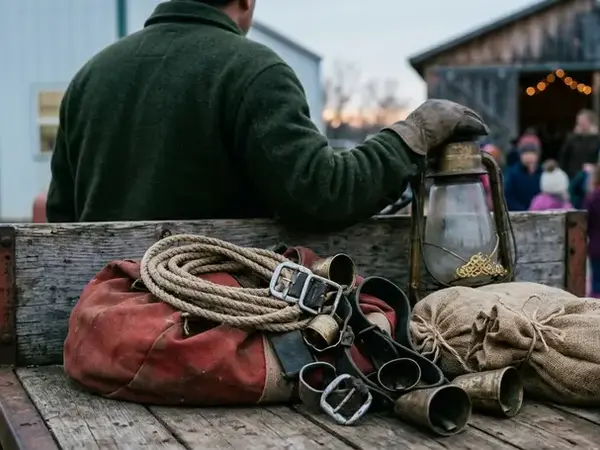
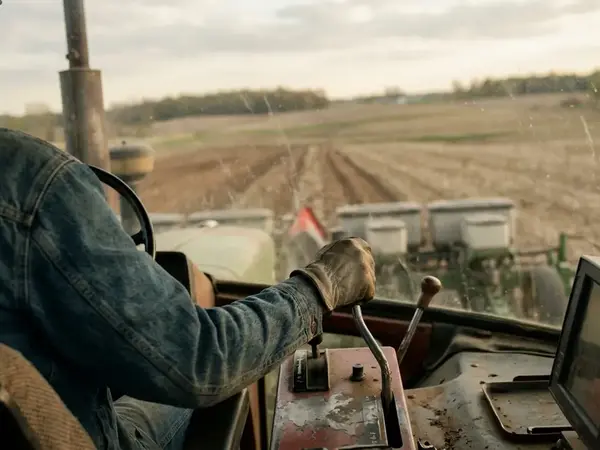
Equipment gets chosen by the next physical constraint, not by how it looks parked. A rotary mower keeps access open through the growing season. A tractor and wagon shorten the pull from the far rows. A netting chute compresses branches only after a customer has committed to a tree.
Wet December ground sets the real limit. When thawed or rain-soaked soil will rut, the practical move is to park the tractor on firmer ground and hand-drag trees out to the wagon. Deep tire impressions, spinning wheels, and mud pushed into root zones are the field's way of announcing that machinery should leave that section alone.
Rutted Root Zones
Damage from a single soft-ground pass outlasts the sale that prompted it. Compacted lanes and churned root zones show up the following spring as poor growth in the trees flanking the track.
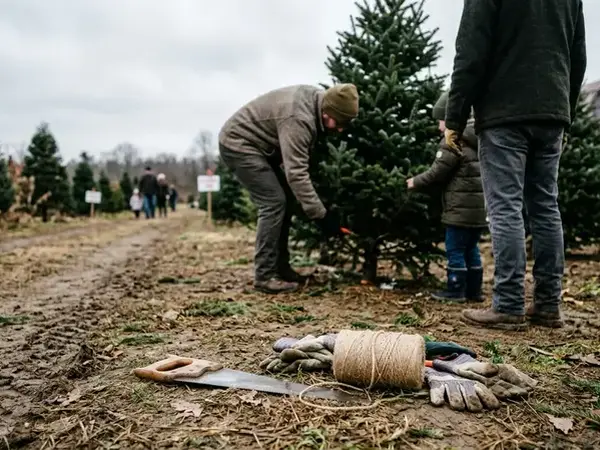
Visitors can assess gear without knowing machinery. A pre-opening check should turn up sharp saw teeth, secure wagon floors and rails, usable hitch pins, guards in place, and a chute that feeds without catching branch tips. Wide turns and moderate wagon loads keep bark and lower limbs from rubbing against rails or standing trees.
What the Price Tag Has to Carry
A selling price carries everything that accumulated before a customer ever touched the tree: planting stock, land occupied for years, mowing, shearing, replacements, losses, harvest labor, and sales-day handling. Trees lost to poor establishment, drought, animal damage, broken leaders, or misshapen growth still consume row space and labor, and they never receive a sale tag.
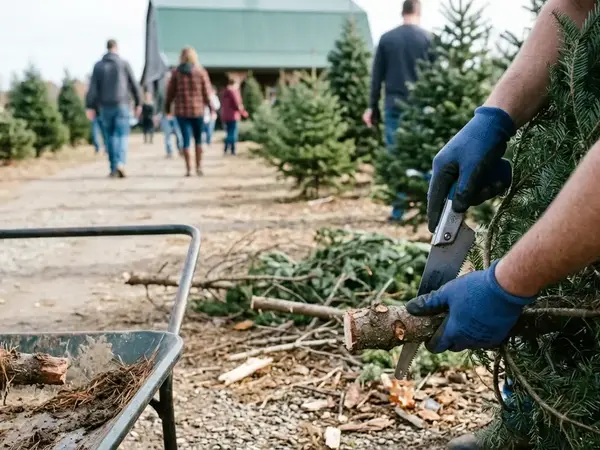
Choose-and-cut and pre-cut divide that labor differently. Choose-and-cut hands final selection to the customer and leaves an unsold tree growing for another season, but it demands safe field access and help at the stump: cutting, dragging, shaking, netting, loading. A pre-cut lot moves most of that work ahead of the buyer's arrival and concentrates the risk in inventory that has already been harvested.
Grading language is public, which helps buyers ask better questions. The USDA Christmas tree grade standards weigh visible characteristics such as taper, density, freshness, cleanliness, and damage instead of treating height as the single measure. Pricing on one Illinois farm, with one soil type and one species mix, does not stand in for every acreage in the region.
Reading a Harvested Block: Replant or Rest
Once a row comes out, the family reads what is left behind. Stumps. Compacted paths. Perennial weeds that got a foothold. Drainage trouble that only appears when the canopy is gone. Surviving small trees. How easily the block can be reached with a mower and a wagon.
A clean, workable section can go straight back to seedlings. A tired or troublesome one sits out a growing season while stumps come out, weeds get knocked back, lanes get repaired, or protective ground cover gets established.
Those choices are where farm memory actually lives. Where winter exposure damaged a planting, where water stood too long, where the aisles were cut too narrow to shear comfortably. You can see the record without reading a sign: adjacent blocks of seedlings, repeatedly sheared intermediate trees, and open harvest rows form a planting calendar in the landscape. A change in row direction, aisle width, or species between two neighboring blocks usually marks a lesson carried out of the older planting into the newer one.
What The Rows Remember
Heritage on a working tree farm is a set of repeated decisions about ground, not a founder's plaque. The proof stands in the field at three ages at once.
Walk an Aisle Before You Pick a Saw
Here is the step worth taking. Arrive early on a sales day, or arrange a growing-season visit, and ask permission to step into a young or mid-growth block rather than only the cut-your-own rows. Follow an aisle instead of cutting between trees.
While you walk, check spacing and footing first. Then look at leaders, recent cuts, weed pressure, open gaps, and whether neighboring branches still have room to thicken. Fresh shear work identifies itself: clipped shoot ends, a deliberately shortened leader, and a repeated outline from tree to tree instead of randomly broken branches. Mowed aisles should show you holes, stumps, irrigation lines where they exist, and the lower trunks.
Then ask the grower one question and listen to the whole answer: how many growing seasons has this block been in the ground, and what work remains before these trees can be sold? You will leave understanding the tree on your roof better than any tag could explain it.