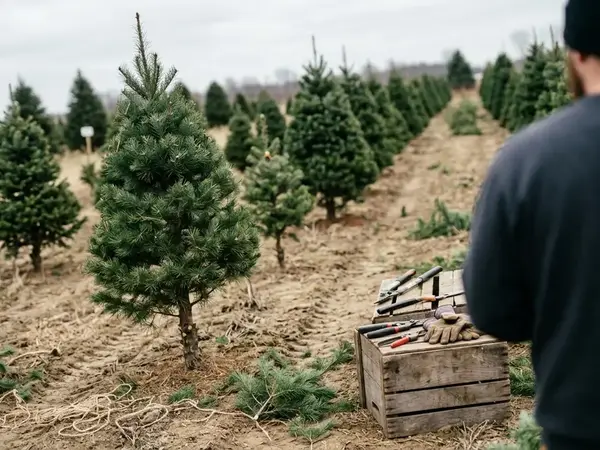

Beating the Afternoon Sun on a Working Farm
Early December in Illinois brings a sharp, specific kind of afternoon. The sun drops low, casting long shadows across the fields at Oney's Tree Farm & Nursery. Sunset generally falls between 4:20 and 4:40 p.m., depending on the exact date. Usable light in the tree rows disappears even sooner under heavy clouds or behind a dense windbreak. Families often find themselves still walking the rows and debating over a Balsam fir while the daylight fails. The walk back still waits.
This audit serves households bringing young children, older relatives, or anyone who tires easily, balances poorly, or uses a mobility device. A U-cut excursion functions as a round trip on working farm ground. Families walk out, choose, saw, and haul back. For an early-December visit, check the farm's local sunset and aim to be back at the sales area 30 to 45 minutes before that time.
A 2:30 p.m. arrival leaves less than two hours before sunset. Parking, payment, and loading eat into a good part of that window. On this kind of ground, an early arrival is what makes a safe, unhurried return possible.
The Outbound Stroll Versus the Loaded Return
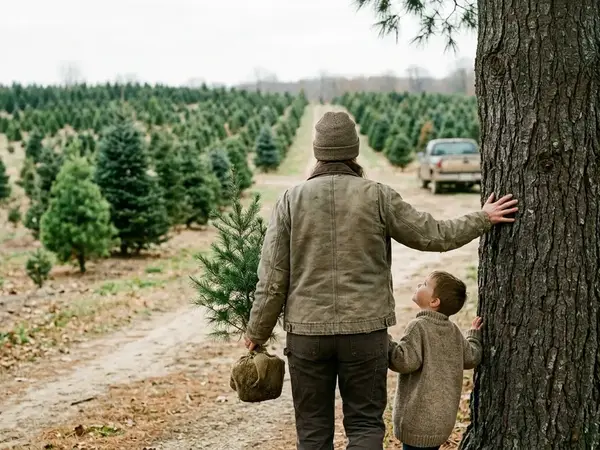
Map the outbound stroll against the return journey. Walking out with an empty wagon and coming back with a felled fir turns one Illinois tree-row walk into two unequal trips. The outbound group carries a saw and perhaps an energetic child. The return group must navigate the same rutted lane while managing a six- to eight-foot tree, a tired child, or a mobility device that already spent its battery or user's energy on the way out.
The Hidden Friction of the Harvest Route
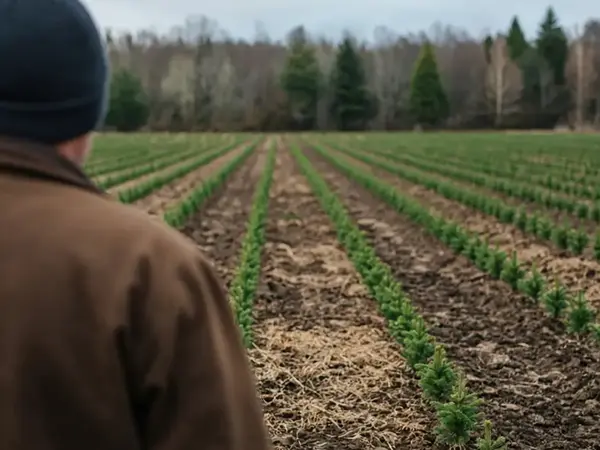
Christmas tree rows follow tractor spacing and harvest access requirements. They rarely offer the shortest pedestrian line from the lot. A wagon, a stroller, a walker, and a wheelchair each face different hurdles between the parked cars and a cuttable tree.
Ask farm staff for the distance in feet, yards, or walking minutes from the actual Saturday parking or drop-off point. Confirm whether an available wagon means a hand-pulled tree cart, a passenger wagon, or a staff-operated vehicle. Those represent three entirely different forms of assistance.
Navigating Frozen Clay and Field Ruts
Inspect the route by observing the transitions. Visitors step from gravel to grass, grass to a crowned field lane, a packed lane to a planting row, and finally from the row to the tree trunk. Each transition harbors potential obstacles. You might encounter a rut lip, leftover stubble, a ditch crossing, or frozen clods.
A morning crust often supports boots and narrow wheels. That same surface softens after the sun or above-freezing air reaches the lane. Water left in tire grooves creates a slick film. The ground then refreezes in the exact ruts that wagons and boots must follow. What looks like a gentle lane from the car easily becomes a twisted-ankle trench between the rows.
Ask what the lane was like after the most recent freeze-thaw cycle. Check conditions again on the morning of the visit when daytime temperatures are expected to cross 32°F. Row spacing, drainage, and freeze-thaw conditions vary by property and day, and federal outdoor access guidelines vocabulary is being used only to describe terrain. A working Christmas tree field operates as agricultural ground. It lacks the paved surfaces of a park trail or an implied compliant access route.
Managing Cold Exposure During Tree Selection
Standing still to debate a tree feels a lot colder than walking. The wind tunnel effect between evergreens strips away body heat. Set the outdoor budget around the person who cools or tires first. Small children waiting in place lose heat rapidly. Older relatives unable to keep pacing face similar risks.
Preserving Dexterity for the Saw
The person removing gloves to handle a saw or tie a rope often loses usable hand warmth before the tree is even down. Winter temperature acts as a strict visit-length limit. Once fingers stiffen, both the saw and the haul become much harder.
For a planned 60-minute outdoor circuit, make the first keep-going-or-turn-back decision around minute 25 to 30. Waiting until after the tree is cut leaves the group vulnerable. Identify the nearest warm-up point early. If that point is a vehicle, confirm that someone holds the keys and that idling is permitted in that specific parking area.
Strategic Pauses and Rest Infrastructure
Inventory the available rest options before dividing the group. A useful pause point requires a stable seat with a back, located near the route and reachable without crossing another difficult surface. A frozen stump or a narrow wagon rail fails to provide guaranteed recovery.
A rest break can easily strand a mixed-ability group if the only seating remains back at the lot while the choosers are still deep in the rows. Work out a simple plan for the family. Assign one person as the warmer or sitter. Agree on a clear turnaround signal. Decide in advance who will wait with the car if the field route becomes impractical.
Before walking out, choose one specific turnaround trigger. This could be a set clock time, the first requested warm-up, or reaching the end of the nearest saleable block. Treat the bathroom distance as an added round trip. Ask whether the route to the facilities is level, plowed, and open to customers during field hours.
The Crucial Stretch From Vehicle to Field Gate
The access audit begins the moment the car door opens. Check whether the passenger steps onto compacted gravel, frozen mud, loose stone, or a snowbank edge. Follow the route through parked vehicles to the field gate. The stretch from car door to first row often decides how the whole trip goes, and overflow parking can spend a family's mobility and daylight budget before tree selection even begins.
Evaluating the Drop-Off Zone
A full Saturday lot frequently adds a walk across deep ruts before the advertised farm walk even starts. Call ahead to learn whether a driver may pause at a gate to unload passengers. Determine if accessible parking exists and remains open.
Ask whether the drop-off point sits beside the sales shed, beside the first row, or merely closer than the overflow parking. Confirm passenger-ride availability for the intended arrival window. A farm truck or gator might be fully occupied with tree hauling during the busiest afternoon period.
Tracking Three Distinct Paces Across the Same Acreage
Walk three qualitative visit timelines on the same imagined Illinois lot. Each one starts from the same 2:15 p.m. arrival, so the gap in timing comes down to the household's pace. All three sample clocks use the same sequence: park, reach rows, choose, cut or wait, rest, return, pay, and load.
The able-bodied pair reaches the rows at 2:25 p.m. They choose a Balsam fir by 2:45, cut and secure the tree by 3:00, return by 3:15, and finish loading near 3:30.
The toddler-plus-grandparent group reaches the rows around 2:35 p.m. They pause frequently while choosing and begin cutting near 3:00.
A visitor using a walker or wheelchair might reach the rows at 2:45 p.m. and begin the cutting process at 3:15.
These scenarios leave only 20 to 60 minutes before an early-December Illinois sunset in the approximate 4:20 to 4:40 p.m. range. The fading afternoon light demands strict attention to the slowest member's pace.
Pre-Visit Terrain Questions for Farm Staff
Hand families a short, specific call list to use before leaving home. Call while staff can accurately describe the current ground conditions. Place the condition call within 24 hours of the trip when thaw, rain, refreezing, or snow could change the field.
- Ask how far the nearest cuttable trees stand from the actual drop-off.
- Inquire about the surface visitors must cross after the latest freeze.
- Check if passenger rides, hand wagons, or staff tree hauling are available.
- Locate the nearest seat and bathroom.
- Ask for the last recommended arrival time while usable light remains.
- Ask whether a pre-cut tree can wait at the shed as a backup plan.
Record the named drop-off location, the recommended arrival time, and whether assistance must be requested again upon arrival. Framing the call as a courtesy helps the farm prepare and gives you solid details to pass along to relatives. Saturday staff can answer ground condition questions that a static website photo cannot.
Which member of your household will dictate the turnaround time, and are you prepared to head back to the barn the moment they ask?