
The Harvest Reality of a Saturday Fir Row
A U-cut Saturday combines moving wagons, hand saws, loose branches, excited children, and customers carrying or dragging trees through crop rows. The sheer volume of activity transforms a quiet agricultural space into a dense, fast-moving harvest operation. Families arrive with high expectations for a peaceful walk among the evergreens. The reality of securing a Balsam fir involves navigating a busy, working environment.
The decision about bringing a pet should be completed before Saturday departure rather than debated after the family reaches a crowded parking lot. Make the decision in three passes. Confirm the farm's current pet policy. Picture the dog's behavior in a confined harvest aisle. Account for mud, ice, wagons, saws, and wildlife. If any pass raises doubt, leave the crate at home with the dog. Collect the tree without managing a leash. Schedule a long walk after the tree is secured in its stand.
Sensory Overload at Ear Level
Assess the visit from the dog's ear level rather than from the family's holiday expectations. Follow the likely sequence of sounds that define a busy harvest morning. Slamming car doors and a rumbling wagon engine start the experience in the parking lot. Shouted directions echo across the fields as families locate their preferred rows and coordinate their search. A bow saw begins rasping at a thick trunk, creating a sharp, unfamiliar vibration. Somewhere down the row, a heavy tree drops to the ground with a sudden thud. Finally, a plastic tarp snaps loudly in the wind as the cut tree is bundled or loaded onto a vehicle.

Several tolerable sounds arriving together can change the behavior of a dog that is relaxed on an ordinary trail. On the busiest Saturday mornings at Oney's Tree Farm & Nursery, the sensory load can continue from arrival through tree selection, cutting, hauling, checkout, and loading, with no quiet reset between stages. In a narrow fir row, a dog may have strangers approaching from both directions. Branches limit its view and prevent an easy retreat. The wagon-saw-tarp breakdown requires judging the dog's day as a chain of harvest disturbances.
Evaluating the Ground Beneath the Needles
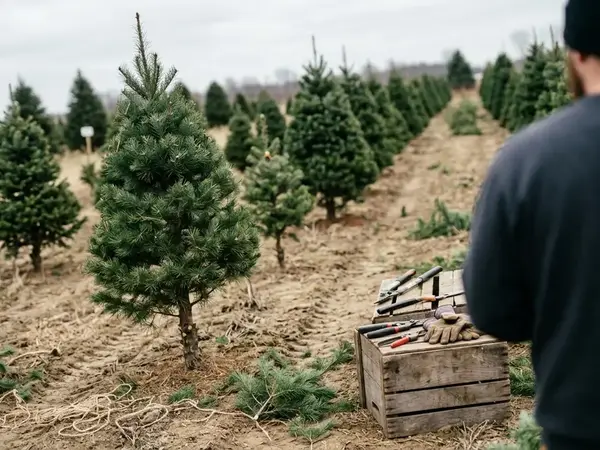
Before treating the field as a casual walking route, scan it carefully as harvested agricultural ground. Look beneath the layer of fallen needles for old, hidden stumps that can trip a distracted walker. Follow the deep tire ruts with your eyes, noting where heavy equipment has compressed the soil. Identify fresh cuts on nearby trees that may hold sticky pitch.
- Concealed stumps hidden by ground cover
- Frozen wheel ruts from heavy farm equipment
- Unexpected irrigation depressions
- Sharp clipped branch ends
- Slick needles layered over uneven soil
Then ask what happens if a rabbit bolts or a deer rises beyond the next row. The relevant question is whether the first lunge could pull a leash across a busy path. A short, fixed leash offers earlier control than a retractable line. It cannot remove the force of a sudden sideways lunge in a tight Scotch pine aisle. A startled lunge puts toddlers, saws, and the dog in the same tangle.
Decoding Farm Access Policies
Read the farm's website or current social media post first, looking for specific guidelines. Call the main office if the wording is unclear or seems outdated. Sort the answer you receive into clear categories: allowed everywhere, leashed-only in specific zones, excluded entirely from cutting fields, or simply not addressed. Treat an unaddressed policy as a reason to leave the dog home. Permission should always come directly from the farm management rather than from an assumption based on what another visitor did in a previous season.
Pet access may differ among the parking area, sales barn, wagon, cutting field, livestock area, and indoor checkout space. Illinois U-cut properties remain working farms on harvest days. Restrictions protect planted rows, resident animals, food-service areas, employees, and visitors who fear dogs or have allergies.
The Friday Evening Decision
On Friday night, sit down and give each of these practical questions a firm yes or no. Is the current farm rule explicit and welcoming? Can the dog wait calmly around loud engines, dropped food, unfamiliar children running between rows, and other dogs passing closely? Can one adult safely control the leash while another person kneels on the ground with a saw, and while the rest of the family waits for hauling or checkout? Any uncertain answer sends the weekend plan toward a safe stay at home or a neighbor's midday visit rather than a stressful trial run in the field.
Check the policy and anticipated Saturday crowd conditions before loading the crate. Assign dog care and tree-cutting duties to named adults rather than improvising in the row. The behavior test should include waiting without barking or lunging, ignoring dropped snacks, tolerating nearby strangers, and remaining settled while the family stops to cut and carry the tree. Leaving the dog behind is kind only when the home or crate is already a safe, familiar setting; a dog with separation distress, medical needs, or no established crate routine needs an at-home caregiver or another planned arrangement.
Finalizing the Weekend Plan
Picture the decision happening just once, without debate. On Friday evening, with winter coats hanging by the door, a parent checks the farm's webpage or listens to the voicemail greeting and hears either a restriction or no clear invitation for dogs. The crate remains inside the warm house. The bow saw goes directly into the trunk of the car. The family packs specifically for human footing and cold weather.
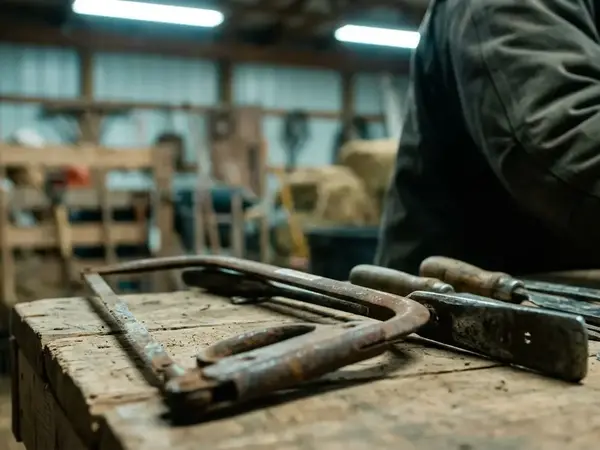
The practical sequence is to contact the farm Friday evening, pack extra water and field-ready boots for the people, secure the saw for safe transport, and plan the dog's dedicated outing for after the tree is placed securely in its stand. After the tree is home and upright, the dog gets its walk without wagons, crowded rows, or a trunk to navigate. Fresh pine pitch from a newly cut stump can mat fur and cling to fabric just as it ruins a wool glove, and it does not rinse off with water; a parking-lot hose will only spread it further into the coat.