
Reading Oney's Layout Before You Read Anything About It
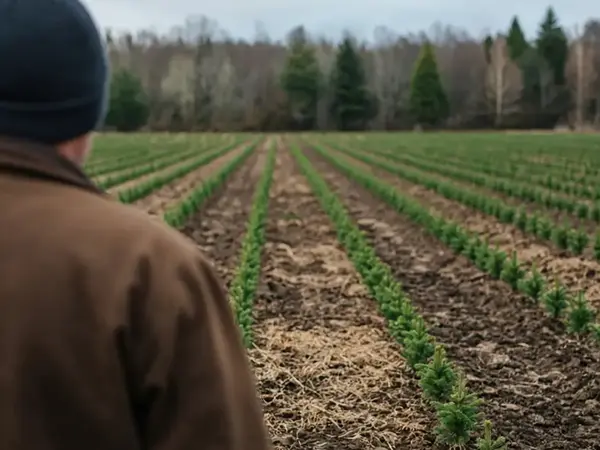
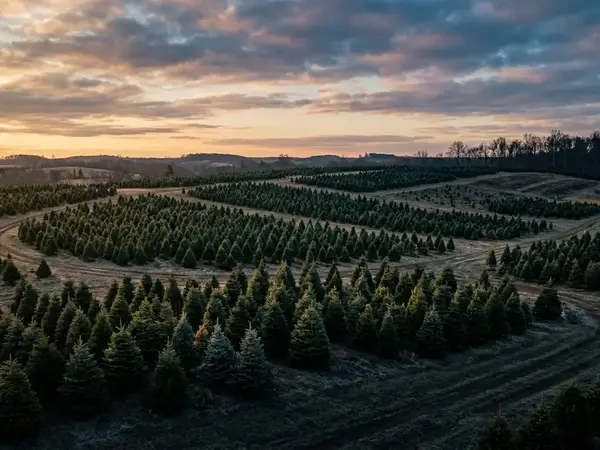
The most reliable record of how a working Christmas tree farm runs is the geometry of the planting itself. Not the brochure. Not the harvest-day anecdote told at the shed, and not the tidy grid someone imagines when they picture rows of balsam fir in a photograph.
Rows at Oney's Tree Farm & Nursery carry decades of accumulated operational decisions, each one pressed into Illinois soil and then left there for anyone willing to pace it. A row's width affects how the crew mows, how a worker shears, and how cleanly a cut tree drags out. A block edge announces itself as a change in tree height or a shift in row direction. These are not aesthetic choices dressed up as farming; they are the farm's ledger, written in spacing and lanes.
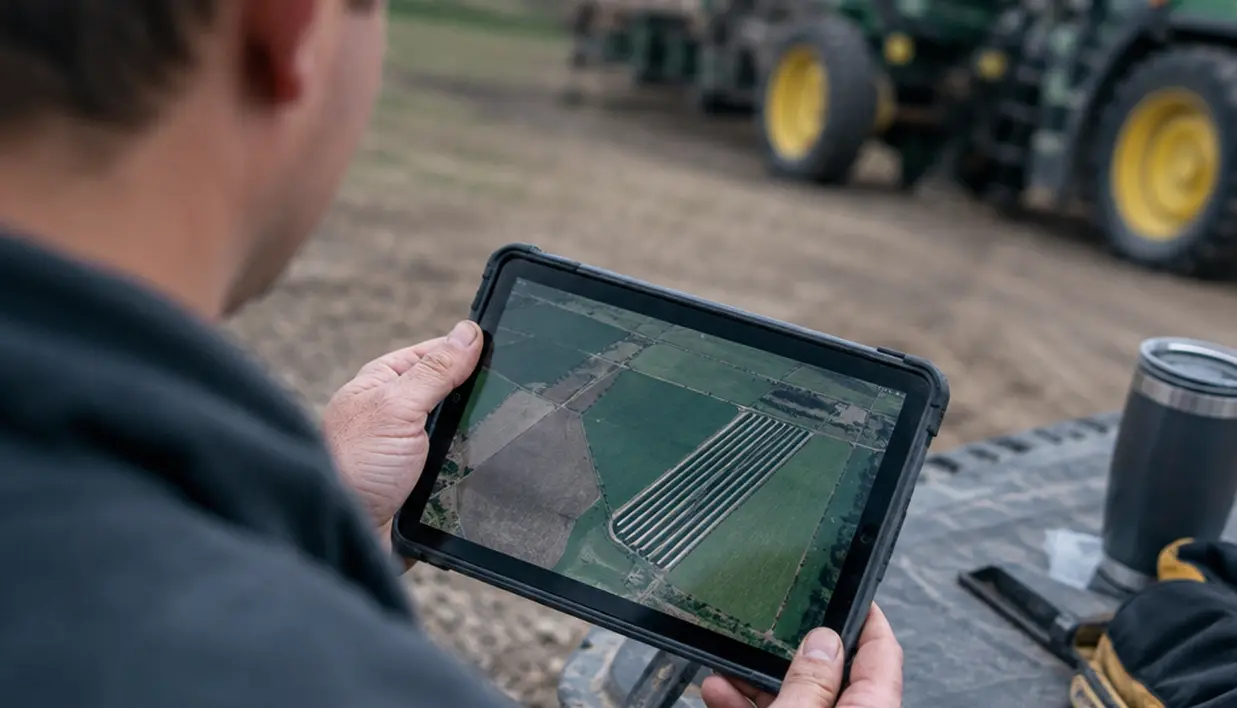
My method is plain and I recommend it in this order. Read the land first, on foot, with nothing in hand. Then bring in the supporting evidence: planting notes where they survive, aerial views for locating seams, and the known growth requirements of the trees themselves. No single one of those sources is complete. Planting records go quiet after a bad season. Aerial imagery flattens drainage and species into the same pale smudge. Growth requirements explain intent without recording what actually happened in 1998.
Treat them as three partial witnesses to the same field and you get a working tour a family can follow in an afternoon. Treat any one of them as the whole story and you will confidently describe a farm that does not exist.
What the Gap Between Two Trunks Is Actually Paying For
Spacing is a bargain struck years before the trees fill out. Four parties sit at that table: shearing room, mower width, root competition, and the speed at which a cutter can work down a row in early December.
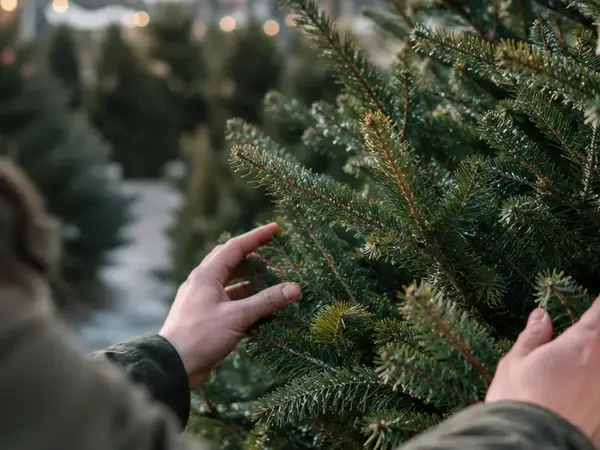
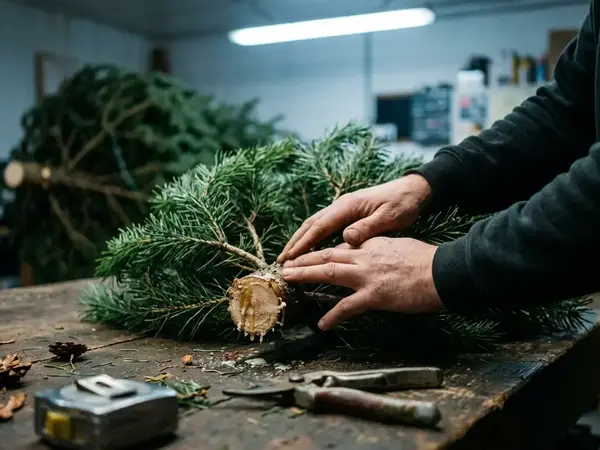
Walk into a mature stand and the requirements become obvious. A thickening balsam fir needs light reaching its lower branches, or the bottom whorls thin out and the tree grades down. It needs air moving through the foliage so needles dry after rain. And it needs an alley wide enough for a person with shears to swing without barking the next trunk or shoving through its branches on the way past.
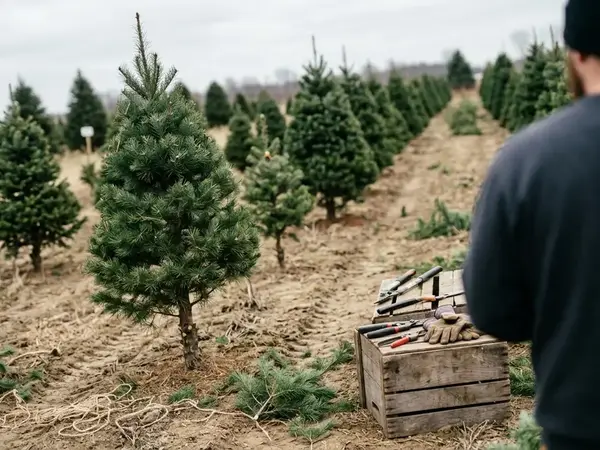
Here is the step I ask visitors to take. Pace the distance between two trunks, heel to toe, and then look down the alley rather than at the trees. Could a walk-behind mower pass cleanly? Or does the opening look sized for a small tractor, which is a different machine and a different maintenance budget? Then check the shearing question: could a worker finish one tree without striking the neighbor?
A row that reads as "too wide" to someone shopping in December is usually the clearance that keeps that row workable in July. Spacing between small trees always looks generous. It stops looking generous once the trees reach nearly seven feet.
One honest limit on this reading: spacing reveals the intended system, not the cause of every gap you see. A missing tree, a mid-block replant, or a seedling that failed its first summer will all distort the pattern locally. Read the repeating interval, not the exception.
Pacing The Alley
Count your paces between trunks in at least three places inside the same block before drawing a conclusion. One measurement catches a gap; three catches the system.
Lanes Set the Harvest Clock
Access lanes are the farm's internal roads, and they do more scheduling work than carrying work. A lane exists where equipment needs room to turn, where cut trees get dragged out, and where a crew can reach a block without walking through plantings that are three years from market.
That placement is readable. A broad, grassy lane with genuine turning room suggests repeated wagon access over many seasons. A narrow cut-through that dead-ends inside a block is almost certainly a crew's working alley, opened for shearing passes rather than for visitors.
Lane position also tracks the calendar. Blocks approaching market value firm ground and a short route to wagon load-out, because December ground in McHenry County does not negotiate. Younger stock gets buffered away from that traffic, which is why the newest plantings often sit behind the blocks being cut.
Where planting-year notes and harvest maps survive, they test this reading directly: a lane's placement usually matches the year a neighboring block came into harvest. Where those records fall silent, and they do fall silent, the ground keeps the evidence. Packed soil and a worn drag line outlast any file drawer.
This is the trunk-to-wagon breakdown worth practicing: pace an alley, find the block seam, then trace the drag line toward load-out. Three observations, one coherent picture of how the farm moves.
Squares of One Planting Year
A choose-and-cut farm stays in trees every December by refusing to let everything ripen at once. That is the whole argument for blocks.
What holds a block together is usually three things at once: a single planting year, a species with similar shear timing, and a harvest window the crew can finish without leaping across the property. Group those correctly and shearing becomes a sequence rather than a scramble. Once a square is cut out, the crew can restake it, replant it, or retire the ground entirely.
On the ground, block boundaries show as abrupt changes. Height jumps. Needle color shifts. Row direction turns ninety degrees for no reason a visitor would guess.
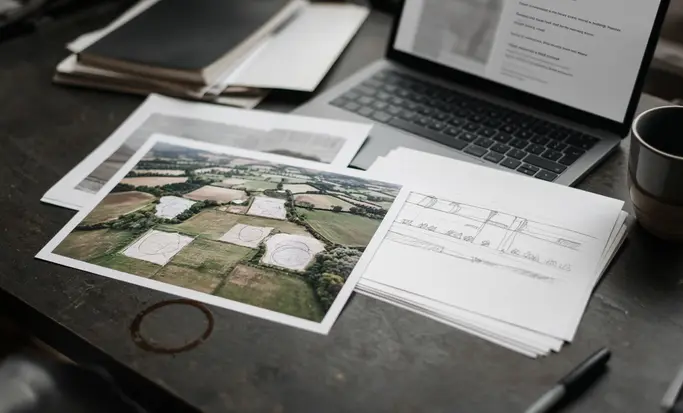
From above, the same seams appear as rectangles and color patches, which makes aerial imagery excellent for locating boundaries and poor at explaining them. A pale patch could be younger trees. It might be a different species with lighter foliage, or a wet corner that drains badly every spring. The image cannot tell you which, and anyone who says otherwise is guessing from a screen. Pair the overhead view with a walk and the seam explains itself in about thirty seconds.
Seam Over Smudge
Use aerial views to find the boundary. Use your feet to find the reason. Height, color, and row direction at a seam will say more in one minute of walking than an hour of zooming.
Where the Saw Route and the Family Route Part Ways
The same ground has to do two jobs in the same six weeks. A cut tree must reach the baler without chewing through young stock, and a family with a wagon and a toddler must find their way back to the shed without a map.
Those routes overlap in places and diverge sharply in others, and the difference is visible once you know the markers. Packed ruts and an established wagon stop identify a haul route. A grassy opening on its own identifies nothing at all. Here is the grassy-alley boundary worth respecting: a cut-through that dead-ends among trees is not carrying the same invitation as a signed, wagon-worn route.
Holiday flow gets designed into the field deliberately. Parking and the shed pull foot traffic along firmer edges, where the ground holds up under repeated use. Interior rows stay open for the actual work of choosing and cutting. After a freeze-thaw cycle turns a corner to soup, the crew may shift a wagon stop or redirect walkers to firmer ground, and the signage changes with it.
Trampled Seedlings
Treating every grassy alley as a walking path is how a block of three-year-old stock gets crushed and how a cutter loses a clean drag line. Follow the wagon-worn path out, then step into a row to choose your tree.
Your Next Visit: One Block, Paced and Asked About
Do this on your next trip to Oney's. Pick one planting block and ignore the rest of the farm until that square has been read properly. Resist the urge to tour.
Pace the space between two trunks. Note whether the access lane runs along the high side of the block or the shed side, because those two placements answer different problems. Then trace, with your eyes, how a cut tree would travel from where you stand to a wagon without crossing a single younger row. If you cannot find that path, you have misread the lane, so walk it again.
Take the reading to the shed and ask one specific question: what year did this block go in, and why do its rows run this direction? Ask about the square you paced, not about the farm in general. The general question gets a general answer. The specific one gets an operational answer about drainage, equipment width, or the year a different species went in along that edge, and that answer turns a December walk into a reading of the land.