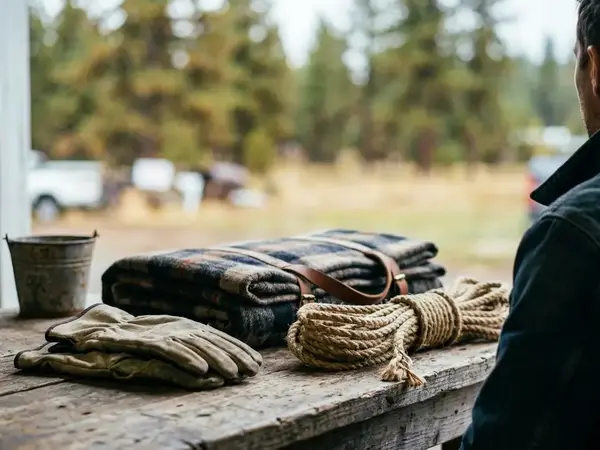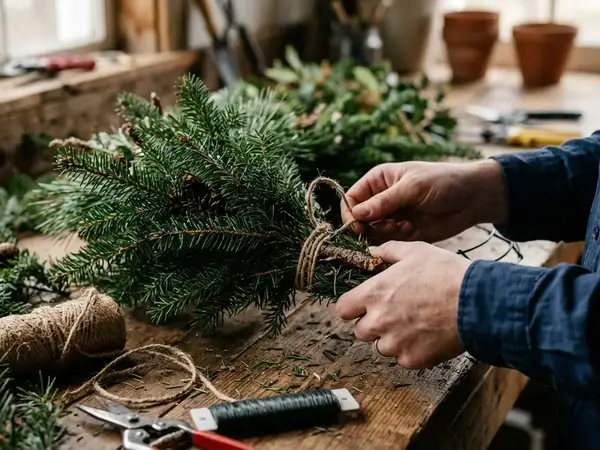
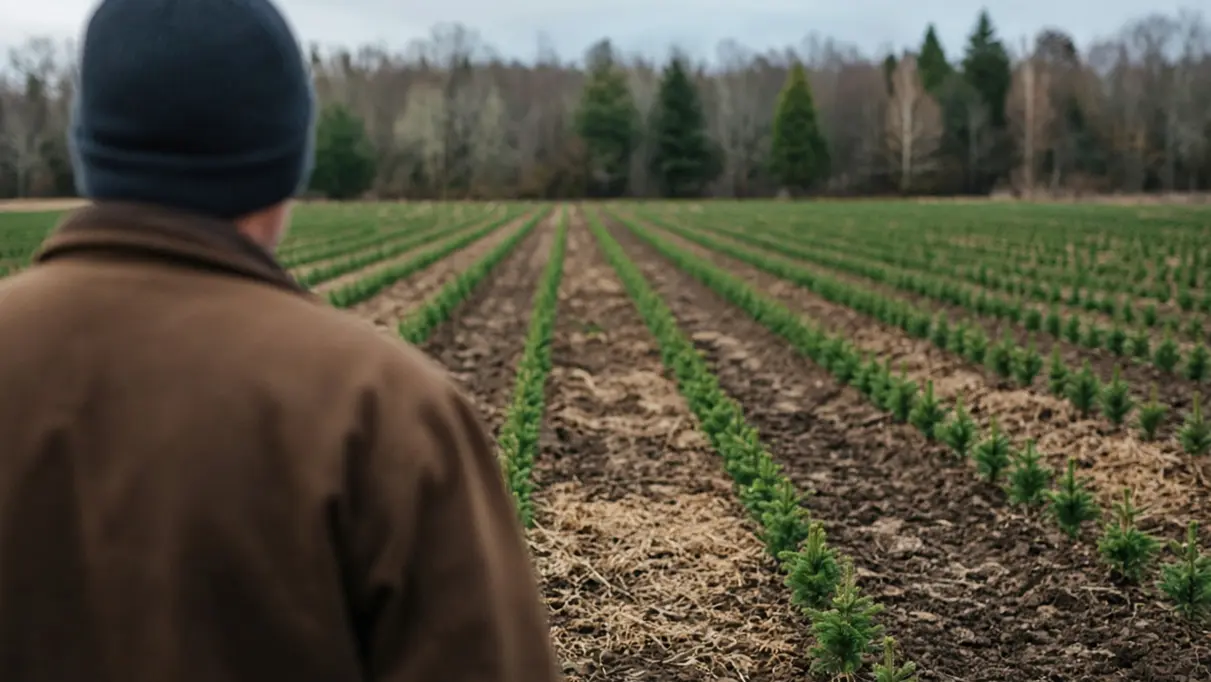

The bundles stay in the shade until the hole is open. That single habit, more than any tool or technique, separates a row that fills in evenly from one that shows gaps three summers later at Oney's Tree Farm & Nursery.
Frost Lifting Off the Fallow Strip
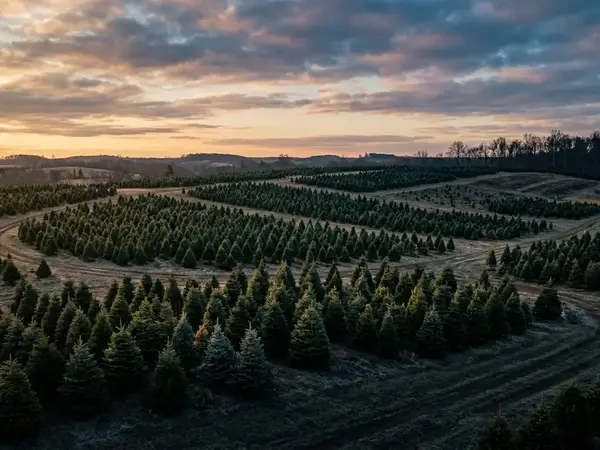
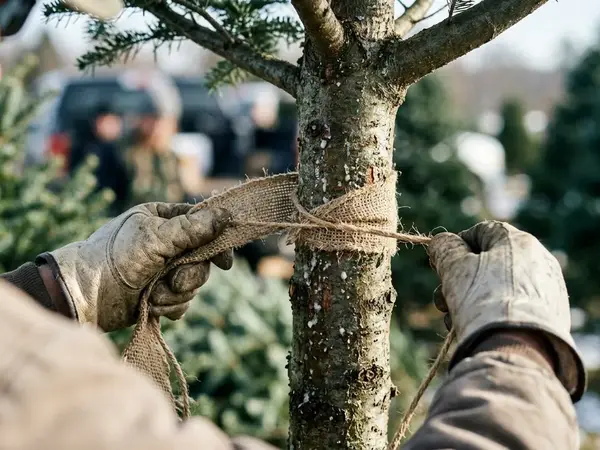
First light in McHenry County, late in the planting window. Frost is coming off the fallow strip in a thin haze, and the planting bar still sticks when it goes into the clay at the head of a flagged line. The tied seedling bundles sit in shade at the field edge, wrapped and damp, with only enough carried forward to keep the planters moving.
The crew stops at the first stake before anything goes in the ground. They walk to the high stake, then the low one, and cut the shovel into both. This is the pause that decides the whole line.
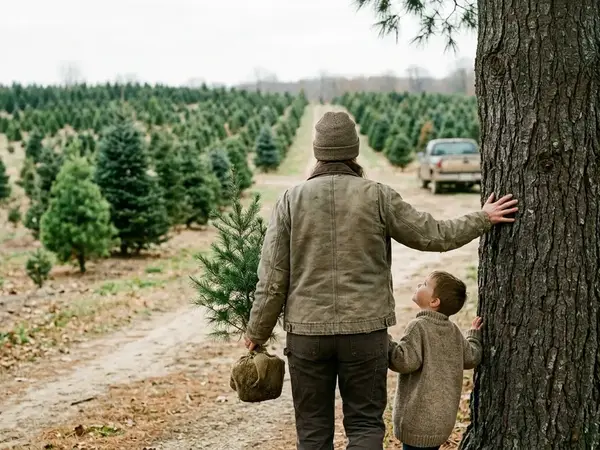
A farm-raised Christmas tree commonly occupies its row for roughly 7 to 10 years, with the harvest interval shifting by species, starting stock, weather, and the size you are aiming for. Weekend garden beds forgive a rushed hole. A balsam fir row has to survive spring saturation, summer grass pressure, repeated shearing, and a decade of harvest traffic tracking down the same lane.
What the Shovel Face Tells You About Wet Ground
Judge the row after rain, from the row — never from the lane. Walk the flags approximately 24 to 48 hours after a soaking spring rain, when persistent ponding and slow-draining pockets separate themselves from ordinary surface moisture. Mark every depression that still holds water with a flag you can see from the tractor seat.
Then cut the shovel in. The test is simple and it has two outcomes:
- The cut face shines and the soil bends into a ribbon. Postpone that section. A smeared, glazed hole wall in heavy clay becomes a sealed pot that fine roots will not cross.
- The soil breaks into moist crumbs and releases the blade. Clear the sod and prepare to plant.
Dull gray low ground and slightly raised, better-aerated soil can sit nearly twenty feet apart on the same strip. Where the county soil mapping is consulted alongside a boot walk, the two usually agree on where the slow pockets sit — the USDA Web Soil Survey maps for McHenry County are a reasonable starting reference before you ever pull a flag.
Site prep is work, not theory. Remove a planting strip wide enough that sod does not close around the seedling within a month of planting, and mark the low pockets for later planting, drainage correction, or a raised planting position.
Smeared Clay Walls
A hole opened in wet clay can look perfect and still kill the tree. If the blade polishes the side of the cut, stop the row and come back in a few days. Seedlings set into a glazed pocket show yellowing in the first season and lean by the second.
Stakes, Twine, and Ten Years of Mower Width
Set both end stakes first. Pull the twine tight, then measure every planting point off that fixed line rather than off the last tree you planted, which is how a row drifts.
Row width comes from the mower and wagon path, decided before a single tree position is marked. A practical starting range is just about 5 to 6 feet between trees and 6 to 8 feet between rows, leaving room for crown development, airflow, mowing, shearing, and harvest movement. Those figures are field-planning guides rather than fixed dimensions; final distances should follow the mature width of the species you are planting and the actual mower, sprayer, and harvest equipment that will run the aisle.
A field-edge row in McHenry County can afford the wider end of that range. A tight backyard line cannot, and the trees show it — inner branches shade out, lower whorls thin, and shearing access disappears by year five.
On the same day the line goes in, write down the field name, row number, species, planting date, row direction, and first-stake location. Weather and machinery remove flags. The map is what the mowing and shearing crews will be reading in year four.
Dropping Roots Straight Into a Cold Hole
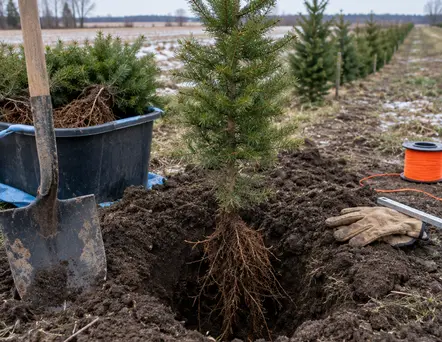
Open the hole only when the next seedling is in hand. Bare-root stock should move from bundle to soil within minutes of being uncovered, with the remaining roots wrapped in damp packing material and kept out of sun and wind. Fine roots dry on a furrow lip faster than most people believe, and there is no recovery from it.
The sequence the crew follows:
- Make the opening deep and wide enough for the longest roots to hang straight down, with no curl at the bottom.
- Lower the seedling until the root system hangs naturally and check that the root collar meets the finished grade — neither perched above it nor buried under it.
- For container stock, loosen the circling outer roots before the plug goes in.
- Return the excavated field soil in stages, firming each lift so air pockets close. Skip the rich amendment pocket; it encourages roots to stay inside the hole.
- Give the stem one light pull. If it lifts, the soil never contacted the roots.
J-rooting is the failure that hides. A root system folded up against the bottom of a shallow hole produces a seedling that looks fine all summer and then blows over in its third autumn wind.
The First Season Is a Walking Schedule
Water as soon as each planted section is closed. The purpose is settling loose soil against the roots, not irrigation — a cool, wet northern Illinois spring may supply everything else the row needs for weeks, while a sudden dry stretch in June changes the math entirely.
In hands-on practice, mulch in a wide, shallow ring roughly 2 to 3 inches deep, leaving 3 to 6 inches of bare ground around the stem so damp material never rests against the bark. The ring's real job is keeping grass off the seedling.
Walk new rows every 5 to 7 days through the first growing season, and again after strong wind, a hard freeze-thaw cycle, or a prolonged dry spell. Look for heaving, lean, vole runs under the mulch, exposed roots, and soil that stays saturated. Dig beside the ring rather than judging moisture from the surface. Reset leaners, press frost-heaved soil back around the collar, and when seedlings yellow in a wet pocket, check drainage before anyone reaches for more water.
First-Row Field Check
- Seedling bundles are cool, shaded, moist, and protected from wind.
- The high and low stakes have both been tested with a shovel.
- Soil breaks cleanly instead of polishing or ribboning.
- Standing-water pockets are flagged to skip, raise, or drain.
- Root collars sit at finished grade and stems pass the light tug.
- Field name, row number, species, and planting date are recorded the same day.
Bundle Shade Discipline
Carry only what the planters can set in the next few minutes. A full bundle left open on the furrow lip while someone fetches water is the most expensive shortcut on the field.
Which End of the Row Goes First
Here is the worked decision. At midday the afternoon before planting, return to the highest and lowest stakes and make a fresh shovel cut at each. Suppose the raised end crumbles cleanly off the blade and the low clay leaves a slick face. Tomorrow's bundles go to the dry end only. The remaining flags stay exactly where they are, and the skipped clay gets reassessed after a stretch of 3 to 5 rain-free days.
Plant part of a row and document the last occupied stake. That is a usable field decision, and it beats holding seedlings at the row edge while the weather makes the choice for you. Repeat the shovel test the next morning if overnight rain or a hard freeze changed the surface.
The Row Boundary
Plant where the rise crumbles from the blade. Stop where the low clay leaves a glazed wall.
So: does the first seedling go into the high, well-drained rise at first light tomorrow, or do those flags sit another week while the low clay dries enough to slice clean?