
The Cost of Picking the Wrong Species
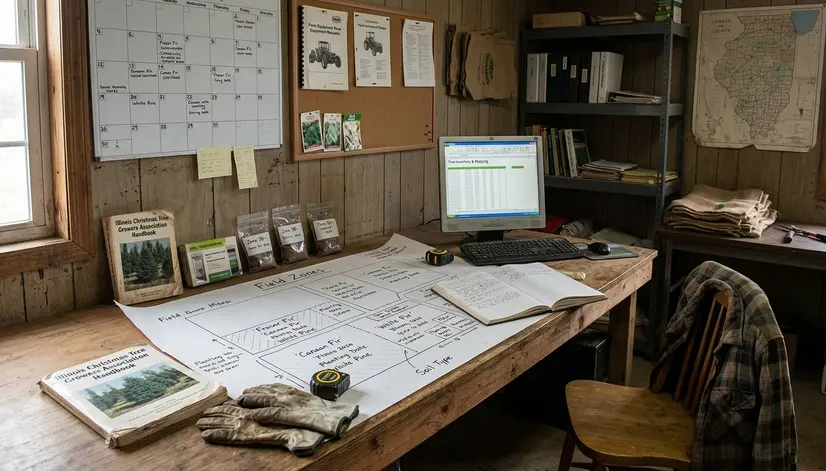
A careful species choice starts before planting by sorting the field into soil, drainage, sun, and wind-exposure zones. A market-size Christmas tree is commonly planned around the 6- to 8-foot range. A poor species decision ties up the same planting space through multiple shearing seasons before the mistake is obvious.
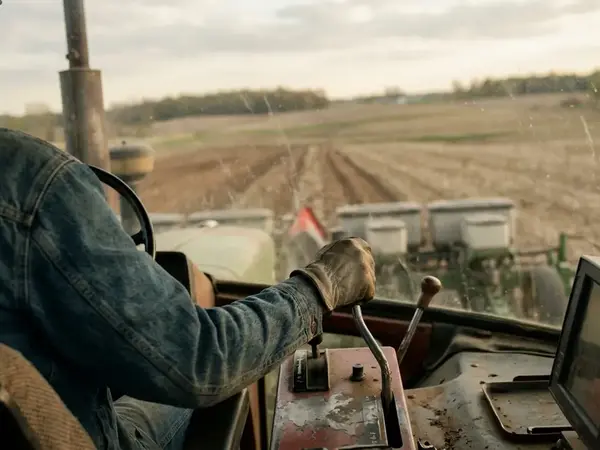
Illinois fields can include heavy prairie-derived soils, compacted headlands, low wet pockets, and exposed winter wind areas within the same acreage. A single-species planting can fail unevenly across one farm—especially when uniform cultivation methods are applied to highly variable ground. A central Illinois grower who plants Balsam fir across a sunny, compacted former row-crop field may see weak establishment even though Balsam fir is highly prized in cooler northern tree regions.
Growth Rates and Regional Climate Fit
The comparison should be made from the ground up. First read the soil test and drainage pattern, then compare growth speed only among species that can handle that site. Illinois spans USDA cold-hardiness conditions from roughly Zone 5a in the north to Zone 7b in the south. Zone 5a corresponds to average annual extreme minimum temperatures of -20 to -15 degrees Fahrenheit, while Zone 7b corresponds to 5 to 10 degrees Fahrenheit.
Where Extension tree recommendations outline regional hardiness, matching species to microclimate prevents late-stage plantation failure. For many Christmas tree conifers, a soil pH near 5.5 to 6.5 is easier to manage than alkaline ground. Balsam fir is especially uncomfortable as pH rises and drainage worsens.
Scotch pine usually earns consideration for its proven adaptability. It can commonly add 12 to 24 inches of height in a favorable growing season once established. Eastern white pine commonly grows 12 to 24 inches per year on suitable sites, especially where soil is well drained and not strongly alkaline. Balsam fir is slower in much of Illinois, often closer to 6 to 12 inches of annual height gain under plantation conditions, and it performs best on cool, moist, acidic soils. Balsam fir comparisons are most useful for Illinois sites with cooler microclimates and dependable moisture; on hot, droughty uplands, the paper advantages of fir do not translate well into field survival.
Needle Retention and Visual Appeal
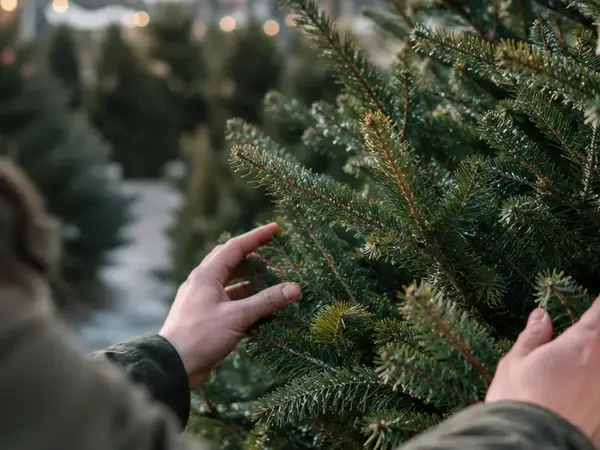
Appearance is judged twice. Families first decide whether the tree has the shape and fullness they want in the field. Again in the living room, needle color and retention determine whether the tree feels like a success.
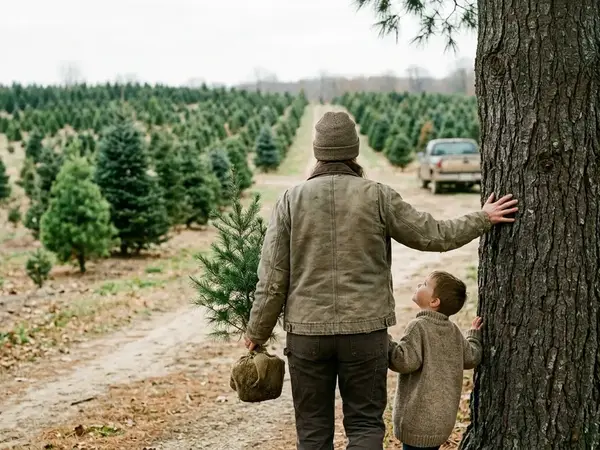
Branch stiffness matters during cut-your-own visits at locations like Oney's Tree Farm & Nursery. White pine can feel easier for children to brush past, while Scotch pine and fir types usually give a more defined cone shape for family photos and tagging. White pine needles are long and soft, often 3 to 5 inches, which gives the tree a feathery look but less stiffness for heavy ornaments. White pine can look beautiful in the field but disappoint a family planning to hang heavy ornaments, because its soft branch structure changes the customer experience after the tree is indoors.
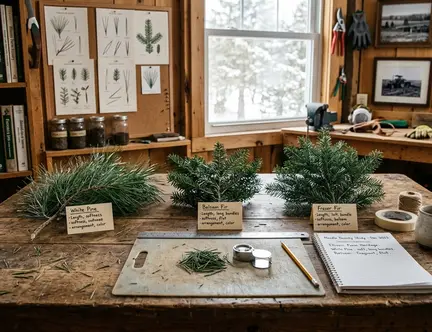
Scotch pine needles are shorter and stiffer, commonly around 1 to 3 inches, helping the tree hold a denser outline after shearing. Balsam fir needles are shorter, flatter, and aromatic, usually creating a tighter, more traditional Christmas tree surface than white pine.
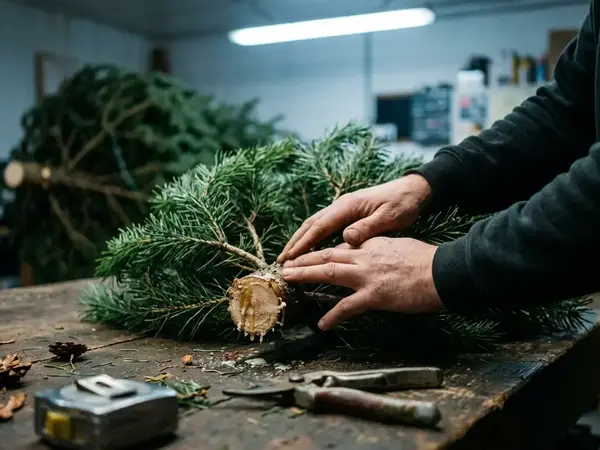
Pro Tip: For home display, any cut tree should receive a fresh trunk cut and be placed in water within a few hours of purchase to reduce early drying.
Ongoing Care and Pest Pressures
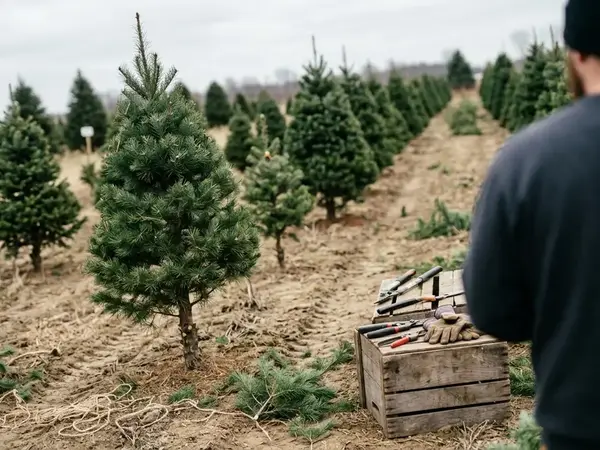
Care decisions are usually made as a seasonal rhythm rather than a one-time treatment. Spring scouting for pests and tip growth transitions into early-summer weed control while seedlings are small. Shearing follows after new growth hardens.
Christmas tree seedlings are often set on 5-by-5-foot or 6-by-6-foot spacing, leaving room for mowing, air movement, and harvest access. Shearing is commonly timed after spring flush growth hardens, often from late June through August in Illinois depending on species, weather, and the grower’s shaping style.
Warning: New plantings need weed competition controlled especially during the first 2 to 3 growing seasons, because grass and broadleaf weeds can rob moisture from shallow young roots.
Scotch pine may appear to be the safest beginner species, yet older Midwestern plantings can carry enough pest and disease history that field scouting matters more than the species reputation. Scotch pine in Illinois can face pine needle scale, European pine sawfly, Diplodia tip blight, and pine wilt concerns. White pine concerns include white pine weevil injury to the terminal leader, blister rust in susceptible settings, and chlorosis on high-pH soils.
Step-by-Step Species Selection for a Central Illinois Acreage
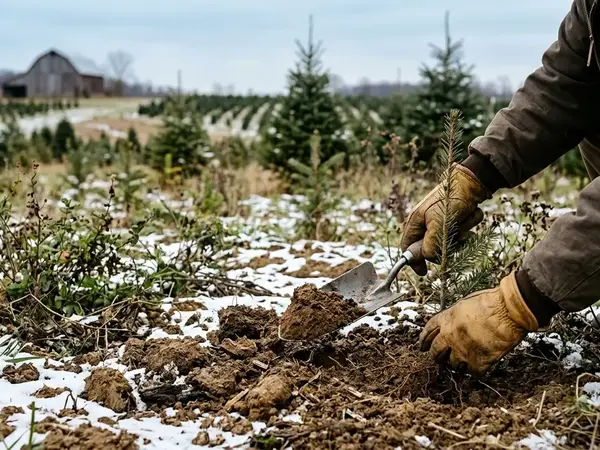
For a central Illinois acreage, the decision starts with a soil test from the proposed field, followed by a walk after heavy rain to mark wet spots, compacted lanes, and full-sun slopes. A good planting plan means matching these physical realities to the right conifer.
- Step 1: Collect soil samples from separate field areas rather than mixing low ground, slopes, and old lane edges into one sample.
- Step 2: Confirm the planting area receives at least 6 hours of direct sun during the growing season, because shaded conifers thin out and lose lower-branch quality.
- Step 3: Map drainage 24 to 48 hours after a soaking rain. Standing water or greasy subsoil is a warning sign for fir and for young pine root systems.
- Step 4: Choose a harvest target such as 6 to 7 feet, then compare expected field time. Faster pine blocks may reach sale size sooner than Balsam fir on the same central Illinois site.
- Step 5: Plant a mixed trial rather than a full single-species block when buyer preference is uncertain, using Scotch pine for sturdy traditional form, white pine for soft texture, and Balsam fir only in the best-matched micro-site.