
Burlapped Trees Outlast Expectations Indoors
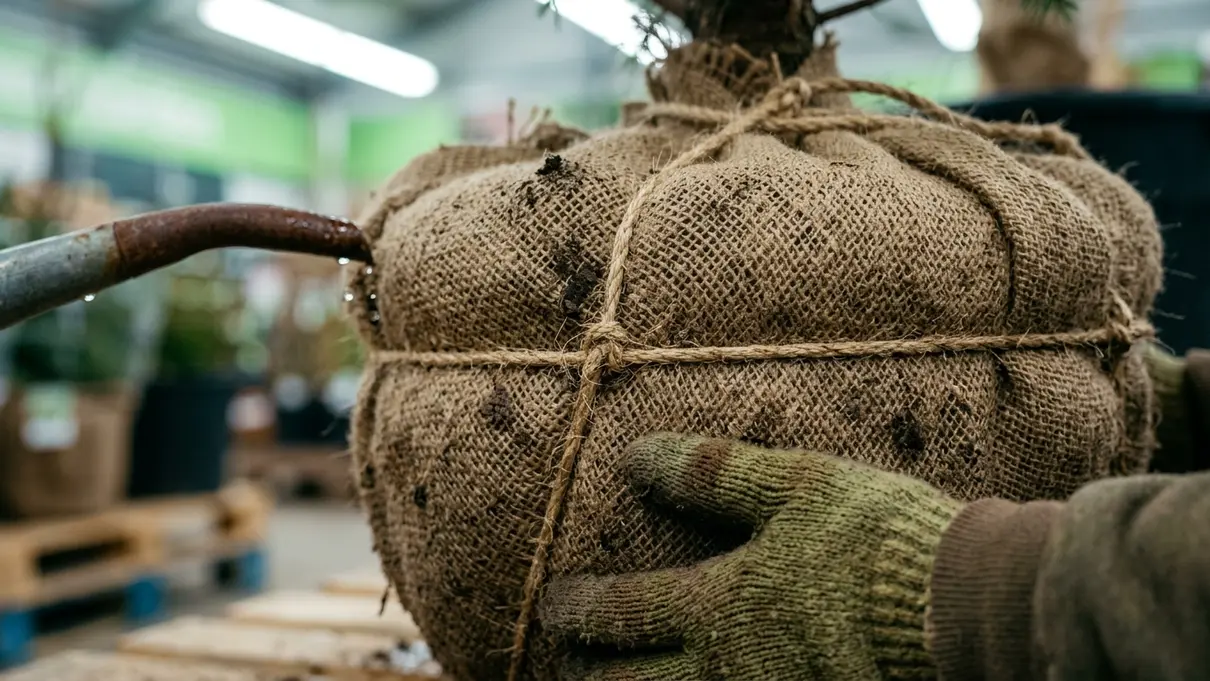
The care plan starts by treating the burlapped root ball as the tree’s survival system, not as a decorative base. Indoor environments are inherently hostile to evergreens. A balled-and-burlapped tree is best kept indoors for a short holiday display, commonly around 7 to 10 days rather than through the full season. The decision sequence is simple—keep the soil mass wrapped and keep indoor air from reaching the roots.
The root ball should remain wrapped and covered while indoors so heated household air does not dry the outer soil shell. A burlapped tree can decline quickly indoors even when watered if the root ball is loose, cracked, or exposed along the sides. This approach assumes the root ball is intact, moist when purchased, and large enough to support the tree; a cracked, undersized, or dried-out soil ball can fail even with careful indoor handling.
Where Oney's Tree Farm & Nursery documentation outlines survival rates, the finding points to root ball integrity over ambient watering. Common overwatering mistakes are avoided by focusing on needle protection instead.
Preparing the Root Ball Before Display
Preparation is handled before the tree crosses the threshold because evergreen needles begin losing moisture as soon as they enter warm, dry indoor air. The chosen order is needle protection first, then root inspection.
Apply an anti-desiccant or wilt-control spray outdoors while temperatures are above the product label minimum and before ornaments or lights are added. Let the sprayed needles dry fully before bringing the tree indoors. In cool outdoor conditions, this may take several daylight hours.
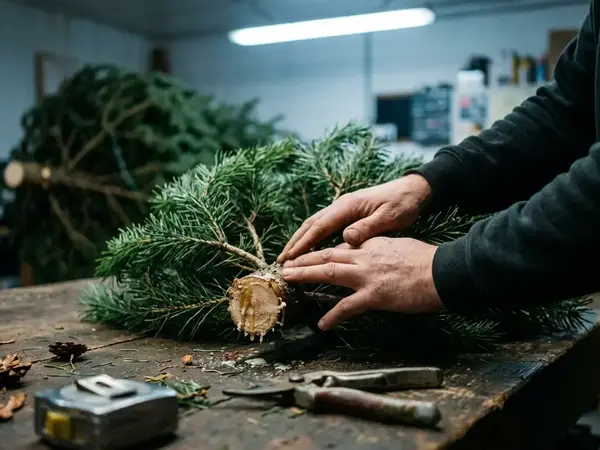
Pro Tip: Keep the burlap tight and the root ball intact. The burlap should be snug against the soil ball with no loose flap exposing the side of the root mass.
A proven method involves checking the fabric wrap for tightness around the root ball before moving the tree inside. Loose fabric allows air channels to form, accelerating soil moisture loss.
Managing the Tree During the Holiday Season
Indoor placement is decided by heat exposure, not by where the tree looks tallest or most centered in the room. The best spot is the one that avoids direct heat while still allowing the family to enjoy the display. Keep the tree away from furnace registers, fireplaces, wood stoves, radiators, and sunny south- or west-facing glass.
A tree placed beside a furnace register may dry through the needles faster than the root ball can supply moisture. Position the tree away from heat sources to prevent seal formation on needles. Monitor root ball moisture without adding excess water.
Check the top and side feel of the burlapped root ball daily. It should feel cool and faintly damp, not wet or sour-smelling. If moisture is needed, add small amounts around the root ball edge and pause before adding more, because standing water trapped under burlap can reduce oxygen around roots.
Replanting After the Holidays
After the holidays, the tree is moved back toward outdoor conditions in stages so needles and buds are not shocked by an immediate jump from a heated room to winter wind. Move the tree first to an unheated garage, enclosed porch, shed, or similar protected space for 3 to 5 days before final outdoor planting when weather allows.
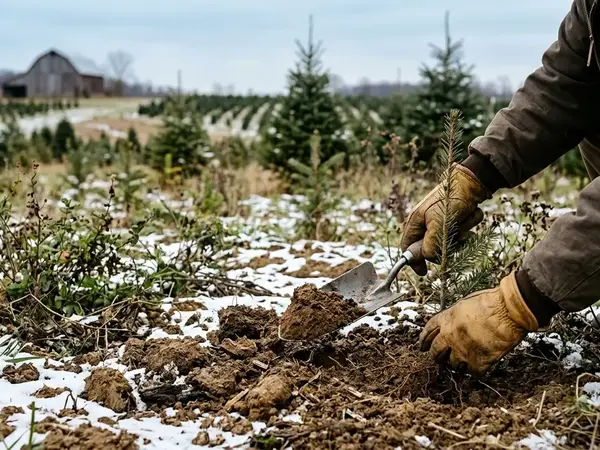
Planting decisions then focus on soil integration. A family with clay soil in an Illinois yard may need to prepare the planting hole before freeze-up, while a sandy, sheltered site may remain workable longer. If the planting hole was prepared before the ground froze, keep the saved backfill where it will not freeze into hard clods.
Set the root ball so the top of the soil mass sits level with or slightly above the surrounding grade. After placement, loosen or cut away burlap from the upper portion of the root ball if it is natural burlap, and remove all twine from around the trunk. Use a temporary windbreak on the prevailing-wind side for the first winter, especially in open yards or along field edges.
Warning: Burying the trunk flare can stress the tree and compromise its long-term structural stability.
Deciding on Your First Tree
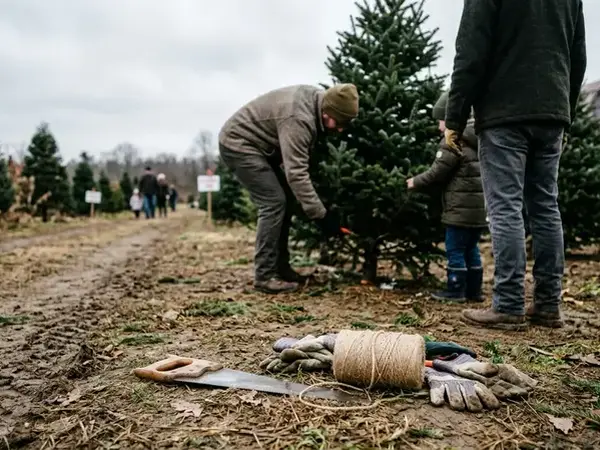
The first-tree decision should begin in the yard, not at the sales lot. Families should choose the planting site by mature size, winter exposure, and long-term clearance, then select a tree species and size that fits.
Live Burlapped Christmas Tree Care Checklist
- Choose the planting site before choosing the tree.
- Keep the burlap tight and the root ball intact.
- Spray needles with a labeled anti-desiccant before indoor display.
- Limit indoor display to a short window, ideally 7 to 10 days.
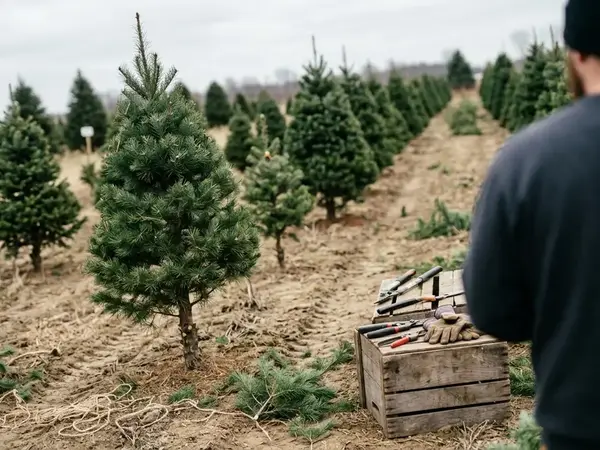
Before buying, mark a planting circle in the yard and check its clearance from buildings, overhead lines, sidewalks, driveways, septic areas, and neighboring property lines. Many evergreen choices sold as live Christmas trees eventually need far more room than their holiday footprint suggests. The planting location should be judged by mature spread rather than indoor display width.
When you look at the mature spread of a Balsam fir compared to your available yard space, which existing landscape feature will dictate your final planting location?