
What You Lose If the Group Enters the Rows Unplanned

On a busy choose-and-cut day at Oney's Tree Farm & Nursery, a child who turns down the wrong aisle can disappear from view before an adult finishes tying a tree. If every adult in the party immediately begins searching down separate paths, the adults lose sight of one another too. The group fragments across the acreage. By contrast, a shared meeting place, a written phone number in a reachable pocket, and one adult whose assigned job is to stay put give the entire family a fixed point of reconnection, agreed upon before anyone steps between the firs.
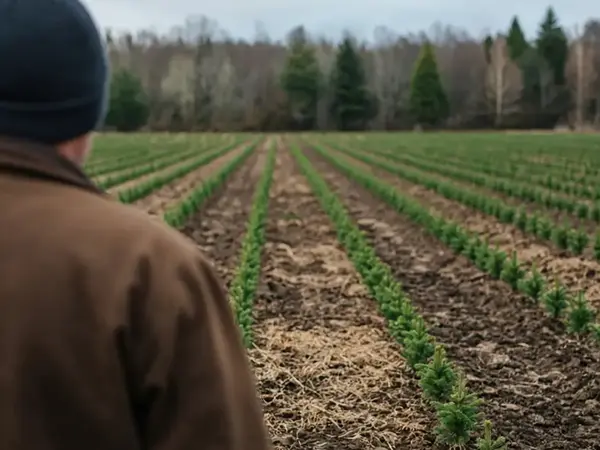
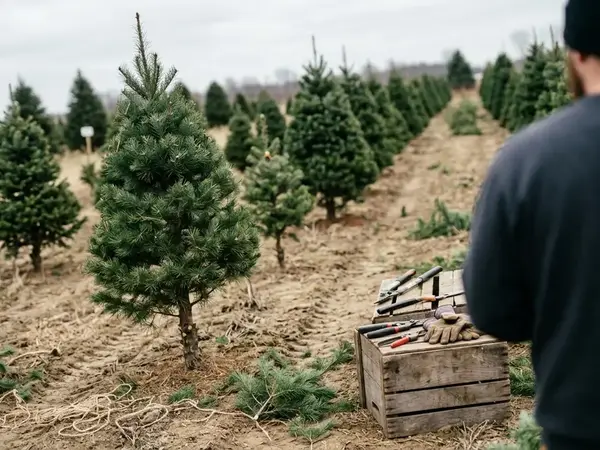
Visual barriers define the layout of an active evergreen planting. Sheared conifers grow with dense basal branches and overlapping whorls that block sightlines at both adult and child eye levels. When families unload from their vehicles and walk directly into the blocks of Balsam fir without a staging plan, they rely on continuous line-of-sight supervision inside a field grown specifically for foliage density. Sound makes the visibility problem worse. Heavy needles absorb high-pitched calls, while wind and the sound of hand saws or tractor engines mask the direction of a voice calling from two aisles away.
Preparation begins in the parking area. Families who complete six basic preparations beside their parked vehicle set up a dependable way to find each other before a foot touches the grass aisles. Every member of the group knows the exact name of the reunion object. Everyone carries physical contact details. Most importantly, the family designates the specific adult who will remain anchored at the meeting place rather than leaving that responsibility to whoever happens to arrive back at the path first.
- Select a single, fixed perimeter landmark outside the tree rows.
- Verify that the landmark is visible from the parked vehicle before unloading.
- Write adult names and mobile numbers on physical paper cards while hands are bare.
- Assign distinct supervision, searching, and anchoring roles to each adult.
- State the stay-put rule aloud while looking directly at the landmark.
- Walk the group from the car to the landmark and back once before entering the field.
Name a Landmark That Is Not a Tree
Step one requires selecting a single fixed object positioned completely outside the planting. A painted entrance gate, a specific barn door, the main lot sign, or a heavy farm wagon confirmed to remain parked for the duration of the visit provides the necessary height and contrast. The object must stand tall enough for the group to spot from the exact location where the car is parked.
An individual tree fails as a meeting place because of the green-wall boundary: a tree recognizable from the parking path loses its identity one aisle over, so the reunion landmark belongs outside the planting. Conifer fields are planted on a grid system to allow uniform sunlight exposure and mechanical mowing. From the main gravel lane, a towering Balsam fir on the corner of a block might appear distinctive due to a double leader or a wide base. Once a visitor walks about twenty paces into the interior rows, that corner tree blends into hundreds of neighboring evergreens sheared to the same conical taper.
Perimeter Landmark Selection Rule: Seasonal displays and movable farm equipment shift throughout the day. Skip inflatables, wreath stacks, photo backdrops, and food tents when naming your reunion point; choose a permanent gate, barn door, or fixed sign instead.
Visual verification happens before the vehicle doors open for the field walk. Every adult and every participating child steps out to the bumper, looks across the staging area, and points directly at the chosen structure. Do not offer a choice between two locations, such as telling children to meet at either the red gate or the twine shed. Ambiguity splits the search effort when stress levels rise. Select one permanent structure, name it in plain words, and confirm that the shortest child in the party can identify its roofline or framing from the edge of the planting.
Evaluating Perimeter Structures
Permanent farm buildings and posts stand out in color against winter cover crops and evergreen needles. A whitewashed timber post or the peak of a processing barn cuts a sharp outline against the sky. When pointing out the landmark to children, trace the walking lane that connects the planting edge to that structure so they understand how the grassy headland leads back to the meeting point.
Write the Numbers Down While Gloves Are Still Off
Step three takes care of phone numbers before cold weather gear makes writing awkward. Before hands go into mittens and phones get buried under heavy winter coats, write each accompanying adult's mobile number on small index cards or slips of heavy paper. A locked smartphone inside an adult's zipped parka cannot help a separated child who approaches a farm worker or another visiting family for assistance.
When preparing for a visit to Oney's Tree Farm & Nursery, written contact cards head off the recall failures that happen when a child is startled. Under stress, children who have memorized a parent's ten-digit number at home frequently transpose digits or freeze when asked to recite the sequence to an unfamiliar adult. Handing over a physical card requires no recall at all.
Pocket Card Distribution Protocol: Place one written card with the adult anchored at the landmark and a matching card with the adult walking the rows. Give older children their own copies to hand to a helper rather than relying on memory, and have each child pat the specific pocket holding their card before putting on gloves.
Format the cards so someone outside the family can read them at a glance. Write the adult's first and last name directly beside each mobile number so a person assisting the child knows exactly whom they are calling. If the family has an off-site backup contact—such as a grandparent waiting at home—add that number to the bottom of the card as a secondary relay in case rural cellular reception fluctuates inside the lower field blocks. Copy any posted farm office numbers directly from the entrance signboard onto the adults' cards, rather than assuming the property operates a dedicated missing-person dispatch line.
- Primary Anchor Card: Carried by the adult holding the landmark position, listing all field adults and the vehicle description.
- Row Finder Card: Carried by the adult walking the interior aisles with the saw and twine.
- Child Show-Card: Stored in an outer Velcro or zippered jacket pocket that the child can open independently with cold hands.
One Adult Stays, One Adult Searches
Step four sorts out roles before the group separates to compare candidate trees down different aisles. Every adult receives a single, non-overlapping assignment. When a household visits with two adults, one adult takes on both supervising the youngest children and holding the landmark position, while the second adult acts as the finder walking the rows. When three adults are present, roles divide cleanly: one adult supervises the youngest children closely, one adult operates as the finder, and the third adult remains stationed at the landmark so a returning child always has a familiar person waiting in view.
Unstructured searching creates the most common failure on a choose-and-cut lot. Empty gate, occupied aisles: the reunion plan breaks when every adult searches between the firs and nobody holds the named meeting place. If two parents realize an older child has wandered off to inspect another tree and both parents immediately duck into separate rows calling the child's name, the child who follows instructions and walks back to the painted gate arrives at an unattended station. Seeing no family members at the gate, the child frequently re-enters the planting at a different row, compounding the separation.
Before stepping off the main path, adults agree on a hard return time stated as a specific clock minute—such as ten minutes past the hour—rather than a vague promise to check back in a little while. If the group becomes separated before that time, the finder does not launch an unannounced grid search across adjacent blocks. Instead, the finder returns straight to the landmark to check whether the missing person has already walked out to the anchor adult.
Clear roles give families an organized way to regroup, but working farm grounds come with a practical limit: people working the lot and the barn can help once you reach them, and they often know the layout better than a first-time visitor, but they did not see which aisle your group entered and they may be busy helping another family with harvesting equipment or bale twine. Keeping one family adult continuously stationed at the landmark means the reunion spot stays staffed while the finder coordinates with farm workers or checks the last known row.
Say the Stay-Put Rule Out Loud in the Lot
Step five turns the plan into a concrete rule for the children while standing in the parking lot. Spoken instructions should use plain farm words while the children are looking directly at the physical landmark. Tell them clearly: "If you cannot see your adult, stop in that row and call for us. Do not run toward the parking lot, the road, or anyone's car." Instruct children to look from that stopped position for either the named landmark or a person working the farm, and to stay right where they are if neither is visible from their aisle.
Consider how quickly disorientation happens during harvest. An adult carrying the hand saw kneels down to clear basal needles around a trunk. A child who was holding the spare twine lets go to look at a heavily coned tree one aisle over, takes two turns around wide lower branches, and looks back. Every grassy lane between the rows looks identical. The instinctive reaction for a startled child is to jog down the lane toward the sound of vehicle engines, which can lead toward active gravel driveways or perimeter roads rather than the pedestrian staging gate. The stay-put rule overrides that panic dash by giving the child an immediate stationary task.
Rehearsing the Verbal Script
Skip lengthy lectures about safety and run a quick two-question verbal drill before leaving the gravel lot. Point to the barn door or painted gate and ask the children to say its name out loud. Then ask what their feet do the second they cannot see their assigned adult. Having the child speak the landmark name and the phrase "stop in my row" builds a habit while everyone is still calm.
Match the reliance on this script to the ages of the children in the party. Younger toddlers cannot reliably wait in place when frightened; their protection depends entirely on the staying adult assigned in Step four keeping hold of a hand or keeping them in the wagon. The verbal rehearsal serves older children who have been allowed to walk roughly ten paces ahead along the row to scout for trees. Throughout both the parking lot rehearsal and the walk through the planting, adults keep all cutting tools sheathed and in hand so nobody sets a saw down in the grass if a quick head count is needed.
Walk to the Gate Once, Then Step Into the Firs
Step six moves the plan from conversation to physical rehearsal. Before anyone enters the evergreen blocks, walk the entire group from the parked car to the chosen landmark and back once. Preparation is complete only when every pair of boots has stood on the exact patch of ground where the reunion will occur.
During this brief loop to the gate or barn door, pause at the landmark and check three details that must match across the whole party:
- The Named Object: Every child and adult touches or points straight at the exact gatepost, door frame, or sign face so nobody confuses it with a neighboring shed.
- The Card Pocket: Each person pats the specific pocket holding their written mobile number card to confirm it did not stay behind on the car seat.
- The Landmark Adult: The group states by name which adult will be standing on that spot if someone gets separated inside the rows.
Make any necessary adjustments during this short walk while the family is still clustered together in the open yard. If a parked tractor or a newly arrived trailer blocks the view of the sign from the main path, pick a better fixed structure right then and repeat the walk to the new spot.
Between mature choose-and-cut evergreens, a single row of dense foliage is enough to completely hide a person standing just one aisle over. That physical reality is why the meeting place must sit outside the planting at the gate, the barn door, or the fixed wagon—and why the final action before stepping into the firs is to walk to that spot and look back at the rows from the open lot.