
When Midwestern Growers Traded the Winter Woodlot for Lined-Out Rows
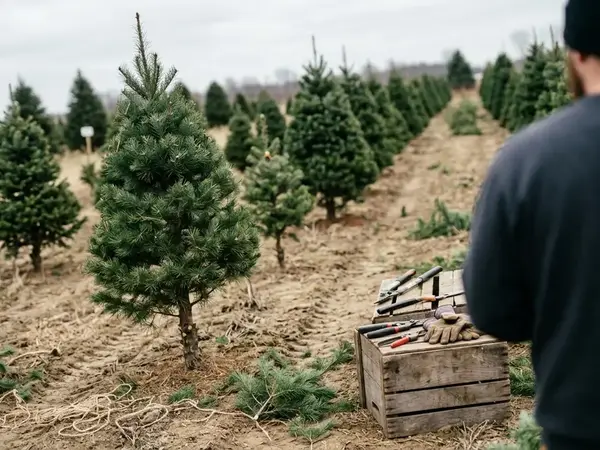
The mid-20th century marked a quiet revolution across Midwestern agriculture. Growers stopped searching winter woodlots for suitable evergreens and began lining out nursery seedlings as a cultivated crop. Straight rows made cultivation, repeated summer shearing, mowing, counting, and organized harvest practical in ways that scattered woodlot trees were never going to allow. This shift pulled a specific horticultural toolkit onto Illinois ground.

Eight tools carry the work from one end of that cycle to the other. The sequence begins with the planting bar, seedling bag, and hoe to establish the row. A shearing knife and hand pruners shape the tree. A bow saw harvests it. Finally, the baling cone and grade stick prepare it for sale. That order tracks a tree from spring planting through several growing seasons, summer shaping, and the December selling period.
The April heel-stamp-to-December-cone chain covers a full agricultural cycle. An Illinois farm's actual tool mix changes with clay or sandy ground, pine or fir growth habits, slope, mechanization, and whether trees are sold choose-and-cut or harvested in wholesale crews. The tools themselves make a kind of working calendar, marking the points at which human hands change the trajectory of the crop.
Spring Soil and the Three Tools of Establishment
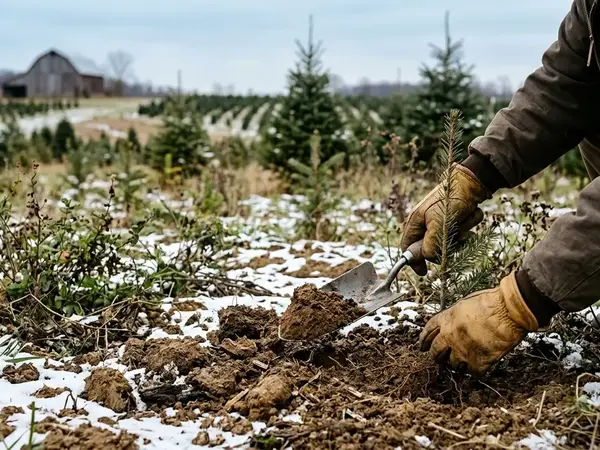
A hand crew relies on the seedling bag to keep dormant plants shaded and their roots damp. Illinois hand planting is commonly scheduled in early spring before budbreak. Crews favor cool, damp soil over a hot afternoon when exposed fine roots can dry rapidly and clay can glaze instead of closing properly around the new tree.
The planter drives the heavy steel planting bar into friable soil and rocks it enough to form a narrow slit. They lower the roots without curling them upward, withdraw the steel, and make a second insertion beside the first to close the slit from bottom to top. A firm heel stamp finishes the surface. A light upward tug confirms the tree is securely seated in the ground.
Root Fold Risks in Heavy Clay
In heavy clay, an April-set seedling leaning in June usually traces back to a shallow slit, folded roots, or an air pocket left by incomplete closure.
Tractor planters handle long regular rows easily. The planting bar still works best for mortality replacements, wet pockets, short row ends, and infill where machinery cannot turn. The hoe serves as the unglamorous third planting-season tool. Vegetation control matters most during the first two to three growing seasons. Grass around the stem can compete for moisture and conceal damage long before a tree ever sees a saw.
Shaping the December Silhouette with Steel
The shearing knife actually makes a Christmas tree. The shearing pass begins with an intended taper. A worker reads the current season's growth, moves around the tree, and cuts the outer shoots to preserve a balanced cone without stripping the interior. Pines are commonly sheared after the new shoots have elongated but before the new needles fully harden, often from mid-June into July in Illinois. Fir and spruce decisions are usually made later in summer as their growth firms.
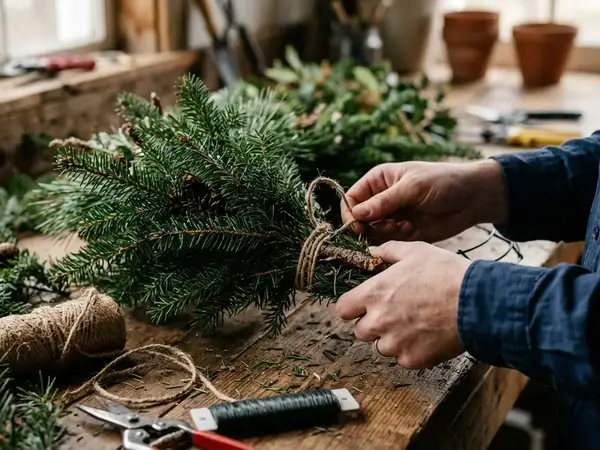
Hand pruners handle the delicate work. They take over for a forked leader, a double top, a damaged terminal, or a branch that needs a selective cut. Keeping those jobs separate protects the leader. A double top is corrected by selecting one leader and removing or subordinating its competitor with pruners. Sweeping both with the shearing knife damages the future structure of the tree.
Hand-shearing yields a dependable shape, though the exact taper depends heavily on the specific pine or fir species' natural growth habit. The December silhouette records several annual summer passes. Taper, branch density, top length, and the location of an open side were established long before harvest. A purpose-ground knife should slice current growth cleanly. Crushing, bark tearing, and repeated hacking indicate that the edge or technique needs immediate attention.
The Bow Saw at the Stump
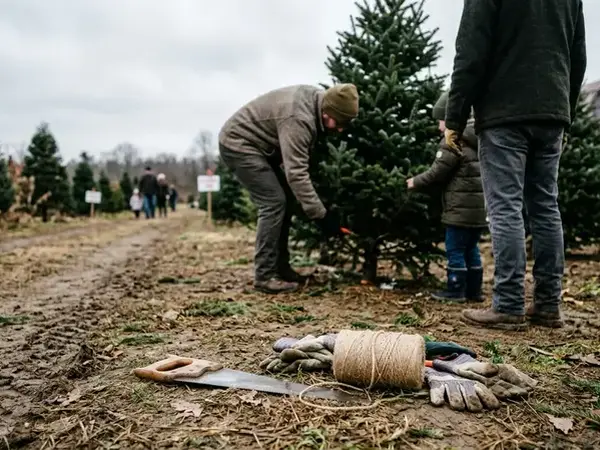
At harvest, the family first chooses the direction in which the tree can settle without dragging its leader through neighboring branches. The bow saw is placed low on the trunk but kept out of the soil, which dulls the teeth. Short level strokes establish the kerf, and longer strokes finish it. The tree is guided clear before the stump is checked for a mowing hazard.
The stump cut may take only minutes after the tree has occupied its row for roughly seven to ten growing seasons, depending on species, starting stock, site, and sale height. Wholesale crews make the same cuts with chainsaws. Many Illinois choose-and-cut lots hand a bow saw to the family on purpose to preserve the physical connection to the harvest.
Clearance for the Saw Frame
The handle side of the bow needs clearance from adjacent leaders. Forcing the frame through a crowded opening can scar a neighboring sale tree.
A low stump simplifies mowing the following summer. Running saw teeth into mineral soil can damage the edge before the next family reaches the row. Cutting is the shortest job in a tree's life. By the time the saw touches the bark, the farm's story is already in the wood.
Baling Cones and Grade Sticks on the Lot
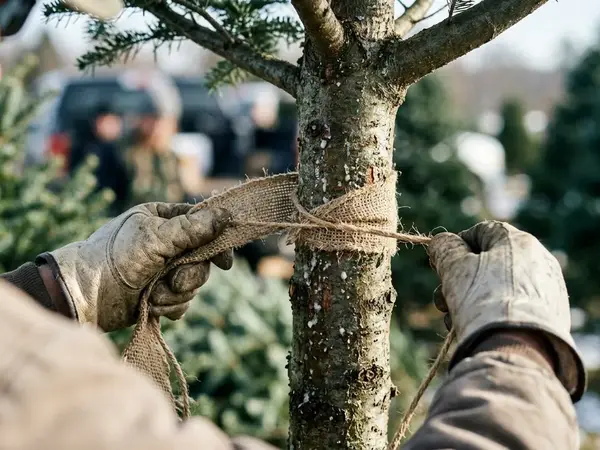
After cutting, the tree is brought butt-first to the baler. As it passes through the cone, the branches sweep toward the leader and enter a net sleeve. This reduces the tree's width for handling and protects the sheared tips from doors, tailgates, and pavement. Netting is transport protection, nothing more. It holds branch tips inward through the parking lot and vehicle trip, after which the tree can be unwrapped and allowed to relax. Excessive compression can disguise a sparse face during loading, but the weak side reappears when the net is removed.
Before or after baling, the seller uses a marked stick to confirm total height and inspect the usable handle. The grade stick separates two measurements shoppers often confuse: overall tree height and the clear trunk handle needed for a stand. A guaranteed handle length helps the tree sit securely once it reaches the living room.
Where a lot uses formal grading language, it ties back to U.S. standards for grades of Christmas trees. These published standards evaluate characteristics such as taper, density, handle, freshness, cleanliness, and visible defects. Ordinary choose-and-cut trees are not automatically inspected or officially stamped, but the principles of the grade stick remain the quiet standard on the lot.
Walking the Farm from Seedling to Stump
The most revealing farm visit starts in the youngest block. The spoken field sequence tracks exactly with the crop's life: planting bar, seedling bag, hoe, shearing knife, hand pruners, bow saw, baling cone, and grade stick. Those tools fall into four working periods: spring establishment, early-row maintenance, summer shaping, and the late-autumn or December harvest and sale.
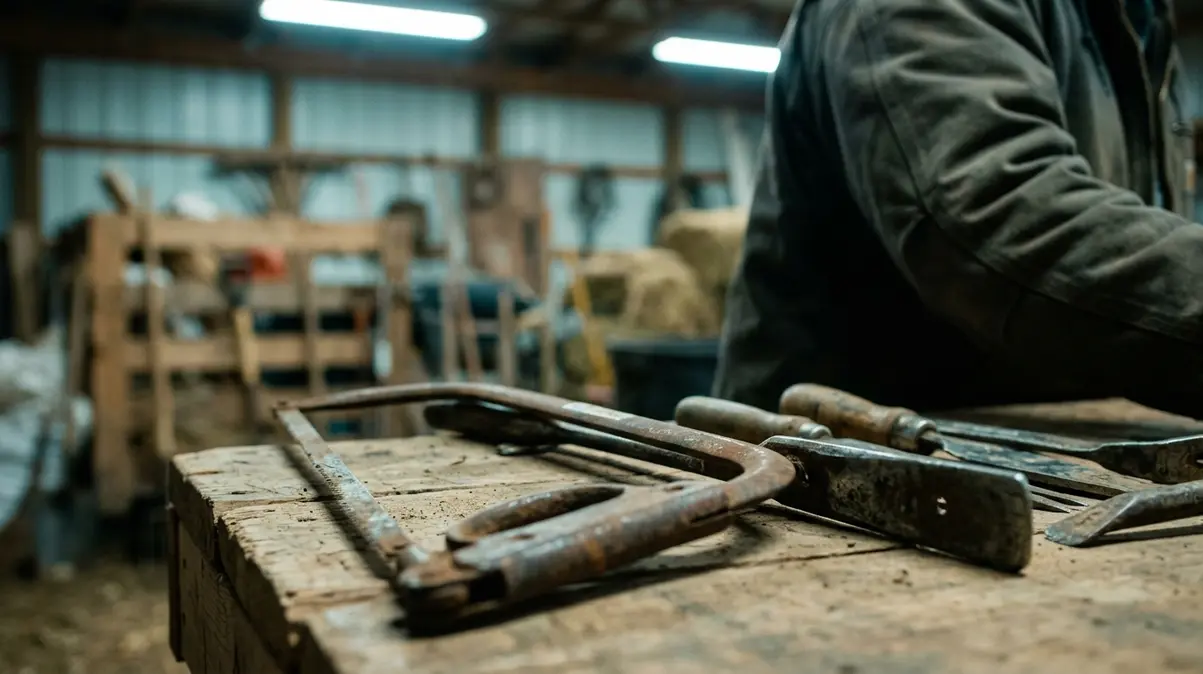
Visitors can look for closed planting slits and weed control, move to older rows to ask which species were sheared that summer, inspect corrected leaders, and only then take a bow saw to a mature Balsam fir. This route keeps the planting bar and shearing knife connected to active husbandry instead of reducing them to rusty barn décor.
Start your visit in the young rows, trace the summer knife work on the mature pines, and cut your own tree at the stump. Stand behind hand-sheared, hand-cut trees on a working lot. The difference between a farm with a visible crop history and a pre-cut checkout pile shows up the moment someone hands you the bow saw—so choose the farm that lets you walk the rows and see the work.