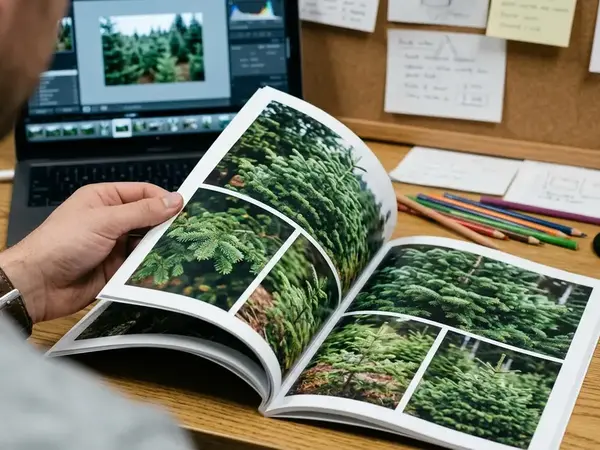
Seven to Ten Years Before Anyone Saws a Trunk
The balsam fir a family carries out in December has been standing in that field for roughly seven to ten years. That is the number to hold onto before anything else, because it reframes what a choose-and-cut farm actually is.
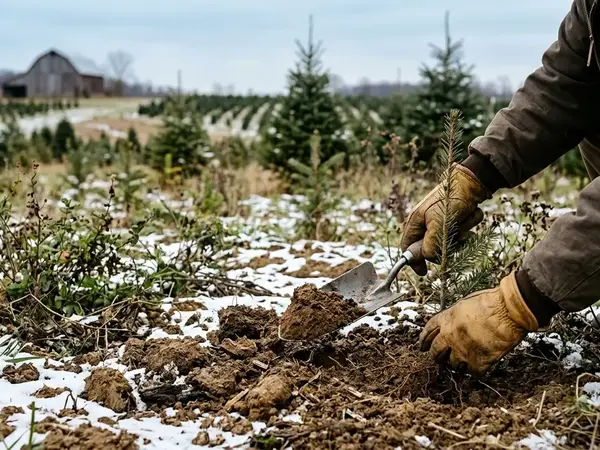
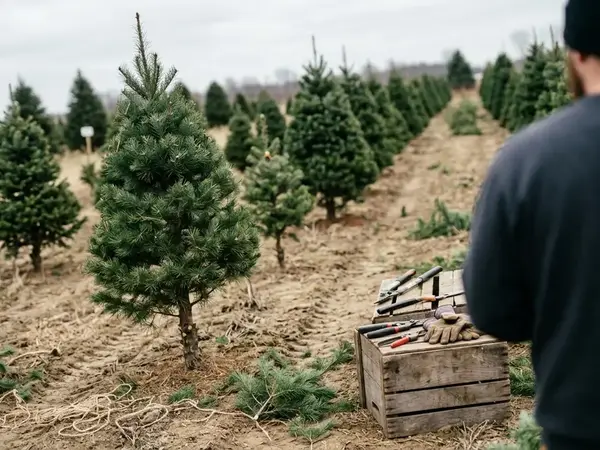
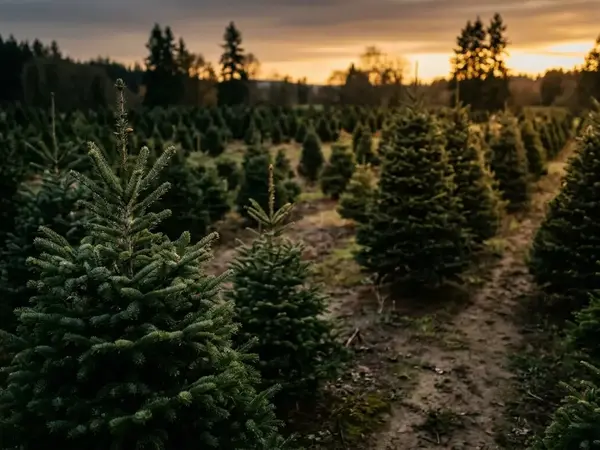
A working tree farm is long-horizon agriculture. The seedling set into a Northern Illinois block this spring is not for this Christmas, or next. It is aimed at a saw roughly seven to ten winters out, and the grower has to plan for that gap by staggering plantings across age classes. One block reaches harvest size while the block beside it is still knee-high.
Here is the part that gets missed. When a working farm disappears, you do not lose a single holiday season. You lose a decade-scale commitment to a piece of ground: the overlapping plantings, the replacement schedules, the years of shaping already invested in trees that have not yet been cut. That commitment cannot be restarted on demand. It has to be grown, one season at a time.
Stewardship That Never Takes December Off
Follow a single block through an ordinary year and the work becomes visible.
Spring starts with checking young stock. Growers walk the new transplants looking for failures, competing vegetation crowding the root zone, drought stress, animal browsing, and any damage to the central leader. Not every seedling makes it. Transplant failure, browsing, a lost leader, or an uneven form can leave a gap in the row or force a removal, and those gaps get noted for replanting.
Through the warm months the tasks shift:
- Mowing between the rows, more or less often depending on rainfall and how the field is drying out.
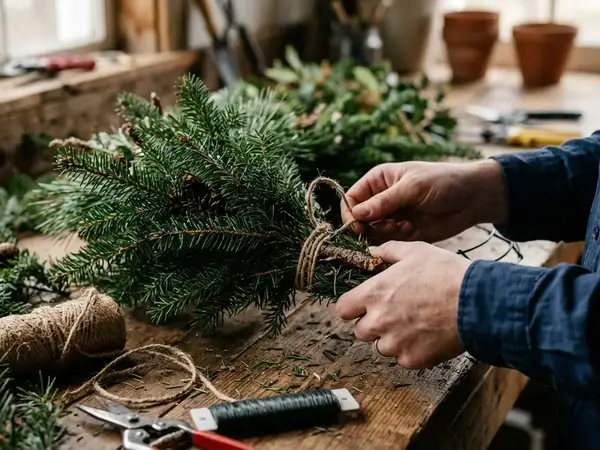
- Shaping and shearing, timed to species and the stage of new growth, repeated across several seasons.
- Leader correction, because a missed or damaged central leader shows up in the tree's form years later, long after the mistake was made.
- Watching for pests, drought, and browse damage all season.
This is what keeps a field open, orderly, and in production instead of sliding toward brush or sitting idle under conversion pressure. Land held in continuous agricultural use is what gives the edges of growing Illinois towns their rural character. Mowed lanes and graded rows do not happen by accident. Somebody is out there in July.
Local Memory Written Between the Rows
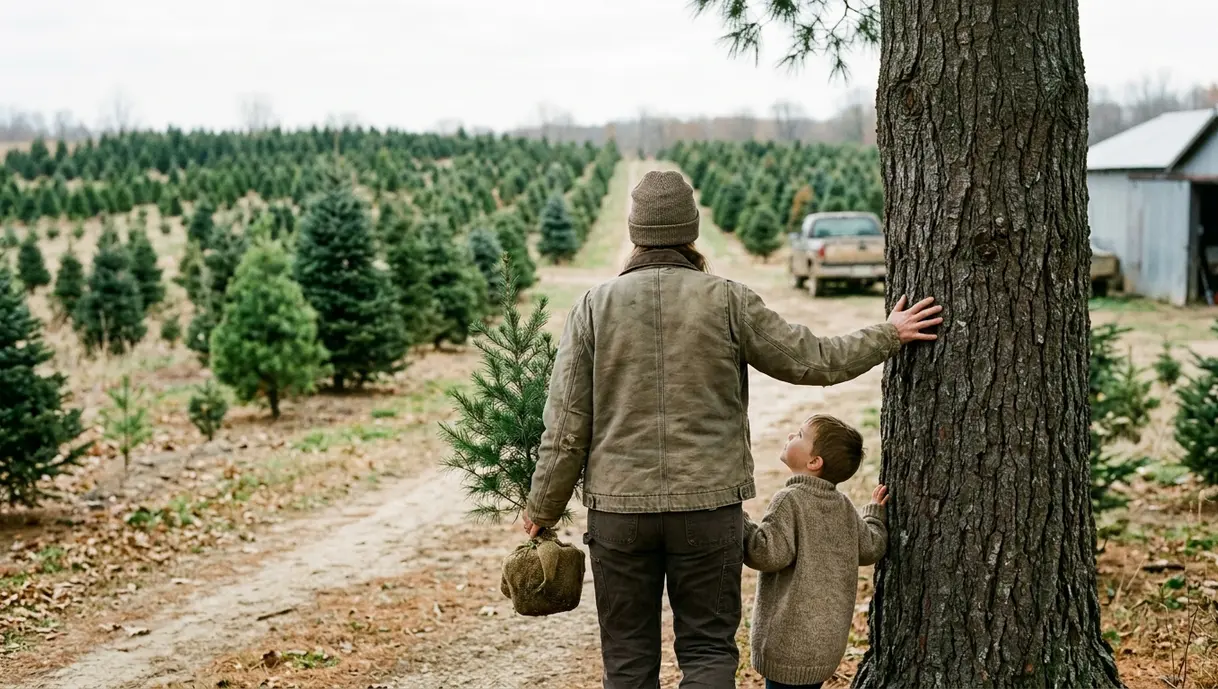
Families come back to the same farm year after year, and they build memory that is tied to that specific ground.
They remember the block that always held the fuller trees. The kids recognize the shaking station before the adults do. Somebody recalls the muddy year, or the tree that finally "looked right" after twenty minutes of circling. A retail lot cannot manufacture any of that.
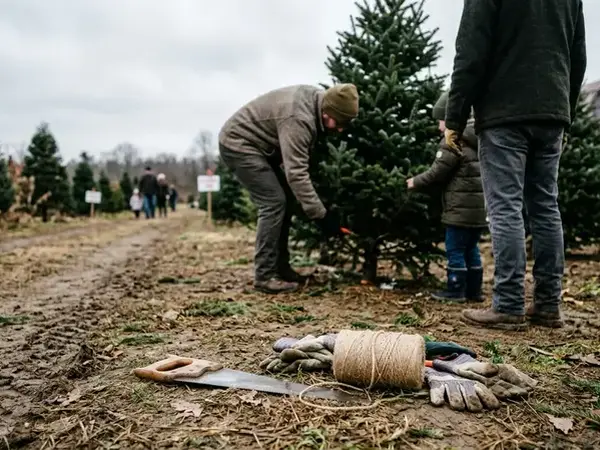
The visit preserves a sequence: you enter the field, compare standing trees, choose one in place, cut it, and drag it back from the row yourself. That order is the story. And because the blocks contain different planting years, a family returning after a few seasons may walk a different part of the same farm as the younger rows finally reach harvest size. The landmark stays; the path through it changes.
A working choose-and-cut field is a living landmark in Northern Illinois farm heritage, not a museum piece behind a rope.
Where a generic retail tree gives you a price and a species, the working farm gives you the field, the walk, and the people who grew the crop. The tree is the same species either way. The rest is not.
Agriculture Families Can Still Touch
Choose-and-cut farms are one of the few remaining places where a visitor handles a living crop and takes it home the same afternoon. No classroom frame required.
The hands-on order runs like this:
- Walk the graded rows.
- Compare species and shapes.
- Inspect a candidate from several sides — someone always finds the thin face nobody noticed at first.
- Cut the trunk near ground level.
- Haul it back.
- Shake it to clear loose needles and debris.
- Secure it for transport.
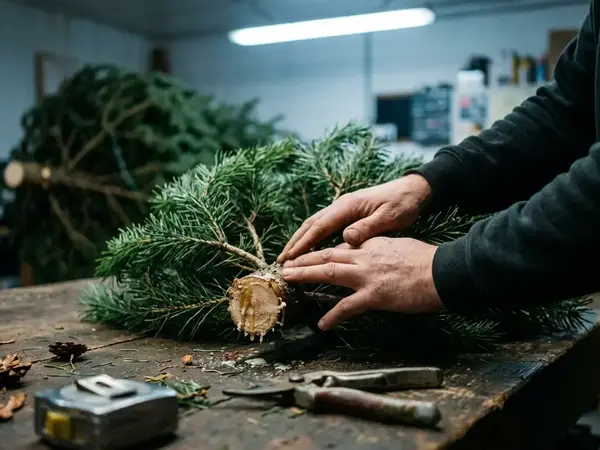
The learning is built into that sequence. A fresh stump shows annual growth rings, and the seedlings nearby make the point without a lecture: this tree occupied the row through roughly seven to ten Northern Illinois winters. For kids and newcomers, growth takes years stops being an abstraction and becomes a thing they can count on a stump.
Weather Still Decides: Snow cover, thawed soil, rain, and wind change the footing and the hauling even when the crop itself is ready. Food-and-fiber systems are not tidy. That is exactly the lesson.
Why 'Working' Land Still Anchors Community
Community value here goes past scenery. A producing field carries several age classes at once, which means land, equipment, and cultivation knowledge stay in use between harvest seasons rather than going dormant.
Think about what active production actually requires locally: people who can plant and shear, maintained lanes and mowing gear, saws and handling equipment, someone directing parking and answering customer questions. Seasonal tasks stretch well beyond December — spring planting, warm-season vegetation control, year-round observation, and autumn prep before the gates open.
The Honest Limit: One tree farm will not solve every conservation, employment, or access need in a rural area. Its defensible contribution is narrower and real: the particular acreage, the farm skills, and the recurring local activity it keeps in production.
Open rows also hold a visible agricultural transition at a town edge — a green working buffer instead of an abrupt jump from subdivision to pavement. That buffer is doing quiet work for how a place feels.
The U.S. count of farms and land use is tracked in the USDA Census of Agriculture, which is where the long trendlines on working farmland live.
What Protecting One Working Farm Actually Saves
The recommendation is plain. Visit local choose-and-cut farms during their posted harvest season. Buy a tree grown nearby when you can. Follow the field and saw rules. And return in later years instead of treating the place as a one-time attraction.
Repeat visits give a grower the reason to maintain staggered blocks, replace what gets cut, hold onto specialized know-how, and keep the fields open. What stays in place is concrete: seedlings and maturing blocks, open production ground, mowing and shearing routines, harvest equipment, and hard-won knowledge of how each field area responds to wetness, wind, pests, and drought. That last piece — knowing which corner floods and which row browns first in a dry August, cannot be bought, only kept.
So here is the number to leave with. The seedling set into a Northern Illinois row this spring is timed for a family's saw roughly seven to ten winters from now. Preserving a working tree farm was never about saving last December. It is about keeping future Decembers rooted in real ground that somebody planted, on purpose, a decade ahead of the family that will finally come walking down the row.