
The Hidden Costs of a Rushed Harvest
The pressure often begins the moment tires hit the gravel parking area. A visit to Oney's Tree Farm & Nursery can easily shift from a seasonal tradition into a timed errand. Families feel the clock ticking, hurry through the check-in process, and march straight toward the first acceptable Balsam fir they see. This hurried pace carries directly into the rows, resulting in a quick choice made under pressure rather than with care.
Common rush failures include leaving gloves in the car, overlooking a crooked trunk base, forgetting the farm's row marker, and discovering at home that the tree is too wide for its intended corner. A tree viewed from only one side can hide an open patch, a doubled top, or an uneven lower whorl that becomes glaringly obvious after the netting is removed in your living room.
Treating the farm as a short, deliberate seasonal outing changes the entire dynamic. Families stand to gain shared calm, a clearer memory of the land, and a tree that feels chosen together. Practical pacing protects the experience from turning into a stressful chore.
Padding the Schedule for Unpredictable Elements
Time management dictates the mood of the entire trip. The schedule should be built backward from the farm's closing or last-entry time, then widened to account for the realities of winter agriculture. Place the farm visit in a stand-alone calendar block.
Add a 20- to 30-minute arrival buffer for parking, check-in, wagon waits, or slower travel in rain or light snow. That cushion keeps the clock from working against you before you even step onto the wagon. Agree on a simple family pace before leaving home: one tree goal, and absolutely no stacked errands scheduled after the farm.
Preventing the Cold-Weather Exit
Small physical discomforts frequently force a hurried exit. Pack water, work gloves, a spare dry layer, and footwear suitable for rutted or muddy rows. Keep the load small enough that one adult can carry it comfortably while walking. When everyone stays warm and dry, the group naturally slows down and enjoys the search.
Pacing the Search Among the Balsam Firs
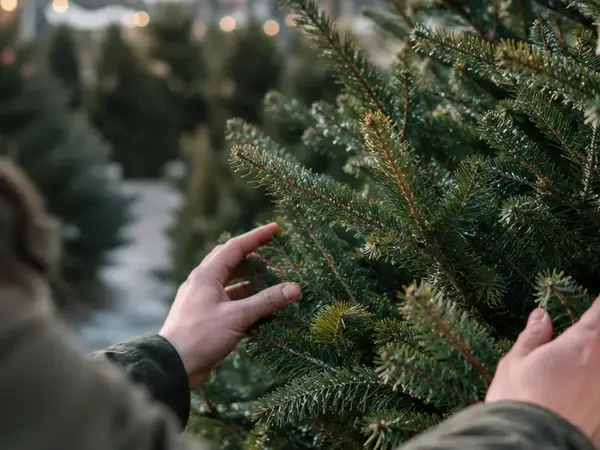
The search itself benefits from a structured approach divided into scouting, comparison, and a final base check. Move at a walking pace through the rows. Pause to compare needle feel, branch spacing, and trunk straightness instead of grabbing the first tall tree that catches your eye. Let kids scout ahead and report back rather than herding everyone toward the exit path.
Walk at least two complete rows before cutting, unless farm staff direct visitors to a smaller harvest area. One catch applies here: a two-row walk may be unsuitable when ice, deep mud, limited mobility, or farm access rules call for a shorter route; the same comparison can be made among several nearby trees or in a pre-cut lot.
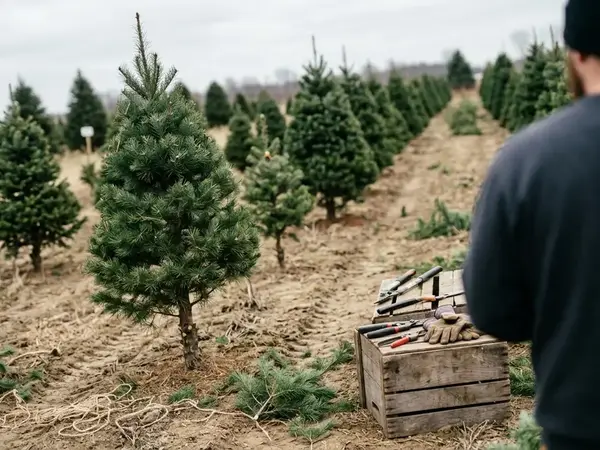
Use the saw or tag moment as a deliberate stop. Before tagging or sawing, inspect the trunk at stand height. Sight upward for a strong lean, check that the top is usable, and compare the tree's widest branches with the space available at home.
Reading the Field and the Growing Cycle
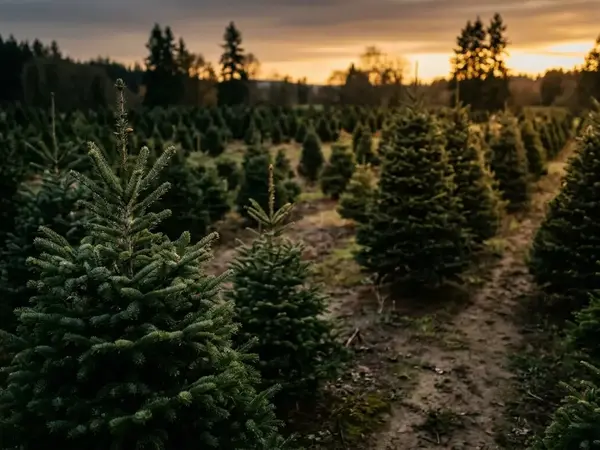
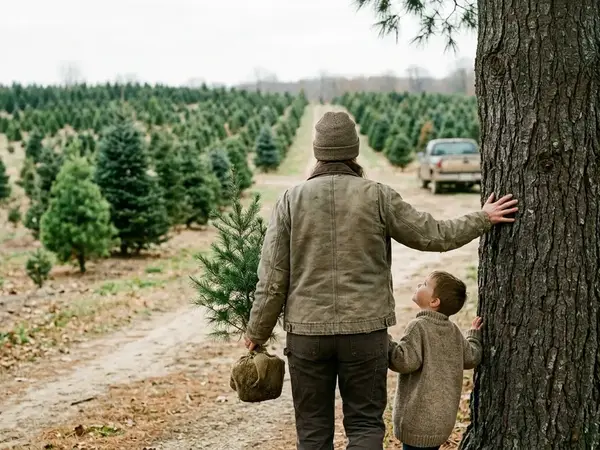
Farms are working landscapes full of observable details. Point out living farm elements families can actually see: footprints in the soil, spacing between rows, cut stumps, bundled netting piles, equipment tracks, and how wind moves through the field. These elements connect the visit to Illinois farm heritage in plain language, highlighting seasonal outdoor work and care that started long before December.
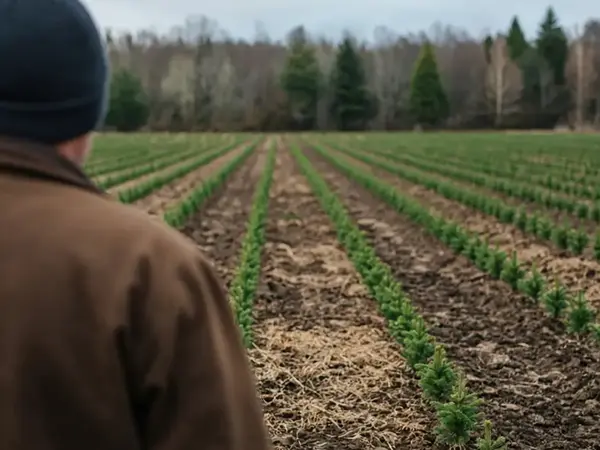
Field-grown Christmas trees commonly remain in production for roughly 6 to 10 growing seasons after field planting. This timing varies by species, starting stock, weather, soil, and desired sale height. Recognizing this multi-year growth cycle helps visitors appreciate the agricultural effort standing in front of them.
Families who take a few minutes to look at the field itself — not just at the trees — usually walk out happier with the one they picked.
Invite a brief chat with whoever is on the lot that day about species or cutting tips. A useful staff question takes less than a minute: ask which species holds needles well indoors, how much trunk should be freshly cut at home, or whether the farm wants customers to leave a tall stump.
Anchoring the Group with Simple Field Tasks
Concrete micro-rituals pull the family back together and reduce sibling friction. These activities attach to tasks already required by the visit. Give everyone a simple job: one person scouts, another checks height, and someone carries the saw pouch. Phone-checking drops when hands are busy.
At the chosen tree, take one group photo, pass around a thermos, or ask each person to name one field detail before the tree is cut. These small moments anchor the memory of the harvest.
The Value of the Second Look
A tree that appears symmetrical from the lane may have a bare field-facing side, a doubled leader, or a trunk that curves near the cut line. Netting can conceal the problem until the tree is opened at home. In one instance, a family found a candidate that looked full from the path but revealed a bare side and off-center trunk when they circled it. Walking just one additional row produced a straighter tree that better matched their room.
Lock in Your Pacing Rule Before Starting the Engine
A single shared rule is easier to remember once coats, tools, children, and checkout instructions compete for attention. Choose exactly one habit: schedule no errands after the farm, walk at least two full rows before cutting, or pause for five minutes beside the selected tree before netting. State the habit in one sentence before departure, such as: "We will walk two rows before anyone chooses." Say it in the driveway, with the engine still off, and the rest of the afternoon tends to take care of itself.