
A Dried Root This Spring Is a Missing Tree Later
A seedling lifted clear of the soil can lose its fine roots to wind and sun long before the row looks dead. When that young plug dries out in the early spring breeze, the gap it leaves behind will not fill itself in a future cut. Reseating a still-moist plug this week keeps the planting year intact, whereas waiting until the needles turn brown means replacing the tree from scratch.
Looking down a line of young Balsam fir transplants in early spring, the crowns almost always look healthy. Conifer needles hold their green color well after the root zone below them has suffered fatal desiccation. That lag between root death and needle browning is where inventory quietly disappears. If a tree dies in year one or two because frost pushed its plug out of the ground, putting a replacement into that spot next spring resets the clock for that specific planting position. You end up managing staggered heights in the same block and losing uniformity when harvest finally arrives.
Walking the rows right after a freeze-thaw event serves as a targeted field check for young Christmas tree transplants, rather than a full replant operation or a season-end survival count. You are heading out with a singular focus: catching exposed roots while they remain damp and flexible enough to settle back into the earth.
Planting Year Payoff: Green needles above a drying, lifted plug hide early loss; checking the root zone while roots remain damp preserves the original planting year instead of restarting that position from zero.
When the Thaw Lets You Walk a McHenry County Row
Timing a frost heave walk requires reading the ground at the row entrance rather than circling a fixed date on a calendar. You want to step into the field when the surface has thawed just enough to carry your footsteps without cutting deep ruts, and well before the next hard freeze locks lifted plugs back into place.
McHenry County springs rarely warm up in a single, clean progression. The weather cycles between freeze and thaw repeatedly, meaning a single pass in late winter does not cover the season. Heavier, wetter ground holds moisture near the surface, creating ideal conditions for ice lenses to form underneath unanchored root balls and lever them upward night after night. Because these cycles repeat, a block that looked tight in late February can show lifted collars two weeks later after a warm rain and a sharp overnight drop.
How do you cover the ground when the thaw window is narrow? Prioritize your route before your boots hit the dirt:
- Target the newest plantings first: Seedlings and plugs put in during the previous fall or spring have the least root anchorage outside their original media.
- Head straight for the lowest, wettest rows: Surface water collects in slight depressions, feeding the ice lenses that push plugs upward.
- Beat the afternoon wind: The useful window closes fast once the sun comes out. A dry, windy afternoon following a thaw can crisp exposed fine roots before a brown leader ever draws your attention.
Where Oney's Tree Farm & Nursery field logs trace spring frost heave, the heaviest lifting clusters in those low, slow-draining pockets where autumn transplants haven't yet pushed lateral roots into the surrounding native soil. Checking the entry of those specific rows gives you an immediate read on whether the rest of the block needs footwork today.
Exposed Roots, Cracked Collars, and Plugs Sitting Proud
Spotting frost lift from the drive lane is nearly impossible. Looking across the tops of a young block from a truck cab or an ATV shows an even carpet of green, because frost heave rarely pushes an entire row up at uniform height. Instead, the lift concentrates among a few plants sitting in a wet depression. You have to step directly into the row and walk the line to see what the ice actually did.
Once you are standing over the transplants, look directly at the soil interface. A heaved seedling shows distinct physical changes right at the ground line:
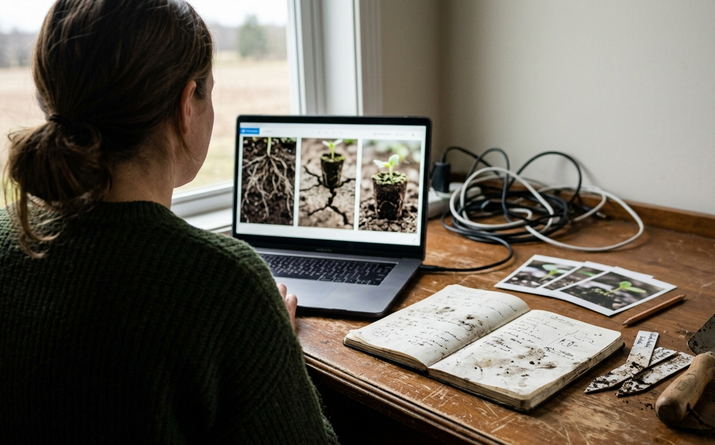
- A stem sitting noticeably above the soil line it was originally planted to
- A fresh cracked ring or an open air gap circling the root collar
- Pale, fine roots or the vertical side of the nursery plug exposed to the open air
- A leader tilting at an odd angle after losing its lower support
- A plug left perched on a small pedestal of soil as the surrounding ice lenses melt away
Distinguishing Planting Height from Ice Lift
Not every high plug is a frost heave problem. Planting crews sometimes set a plug slightly proud on purpose, especially in heavier soils where setting a root collar too deep invites crown rot. A seedling planted slightly high on purpose looks tall if you stare at it in isolation, which triggers false alarms if you aren't careful.
The trick is comparing each suspect seedling with its immediate neighbors set in the very same planting pass. Proud by planting versus proud by ice comes down to fresh separation. If four trees in a row sit slightly high with smooth, weathered soil snug against their stems and no visible plug media, that was the planter shoe depth or the crew's hand-planting rhythm. If one tree in a wet dip sits higher than its neighbors and shows a jagged, fresh crack around the collar or bare white roots catching the breeze, ice pulled it up.
Settle Soil Around the Seedling Without Breaking It
Before you touch a lifted seedling, kneel down and squeeze a handful of dirt from the row margin. You should only work the root zone when the soil crumbles cleanly in your hand. If the ground is saturated soup, pressing on it smears the clay and silt into a tight crust that seals out oxygen and puddles water around the stem. If the ground is still locked in frozen clods, those hard chunks will resist closing around the plug and will tear the fine roots as you push.
When the soil is crumbly and the exposed roots are still damp and flexible, reseating the plant takes just a few seconds of careful handwork:
- Clear away ice or stiff debris: Brush aside any lingering crust so you are moving friable, loose earth.
- Draw soil inward from the sides: Scoop loose soil from just outside the root zone and push it tightly against the exposed sides of the plug to eliminate the air gap.
- Firm with open, broad pressure: Use the palms of your hands or the flat of your boot beside the stem to press the soil down evenly around the root ball.
- Match the neighbor's collar line: Seat the plug and build the soil line so the root collar sits level with comparable, healthy neighbors in the same row.
- Keep the foliage clear: Make sure no loose dirt or heavy mulch buries the terminal bud or covers the lowest green needles.
Collar Damage Risk: Never grab a seedling by its leader and yank or shove it straight down into the slot; forcing the stem downward snaps fine lateral roots and can kink or break the woody tissue right at the collar.
Resettling a frost-heaved transplant is strictly about closing root-zone air gaps and restoring soil contact. Skip the temptation to drop fertilizer into the crack or water the row into mud while you walk; the damp spring earth already holds the moisture the plug needs once the air pocket is closed.
A Single Plug: Reset It, Flag It, or Leave It
When I walk a low McHenry County row after a March thaw, the decisions happen tree by tree within a few paces of each other. It helps to look at how three consecutive suspect seedlings in the same planting pass get handled on the spot.
Seedling One: The Damp Lift (Reset)
Stepping into a slight dip in the row, the first Balsam fir plug shows an inch of peat media above the dirt and a ragged gap circling the stem. A quick touch shows the exposed fine roots on the side of the plug are still damp and bend easily without snapping. The soil along the row edge crumbles nicely between the fingers. Here, I draw two handfuls of loose soil in from the sides, tuck them snugly against the plug wall, and press firmly with both palms until the collar matches the soil level of the stable trees just up the slope. The air gap is gone, the buds are clear of dirt, and this planting position stays on schedule.
Seedling Two: The High Set (Leave)
Three trees further down the line, another seedling catches the eye because its root flare sits noticeably higher than the standard depth. Looking closer, the soil around the base is smooth, weathered from winter rain, and tightly sealed against the bark. There is no fresh crack, no air pocket, and no pale root tips poking out. Checking the next two trees in the line shows the exact same height—the planter rose slightly coming out of the dip last season. Pushing or digging around this tree would only disturb roots that are already anchoring themselves. I leave it completely alone.
Seedling Three: The Crispy Ejection (Flag)
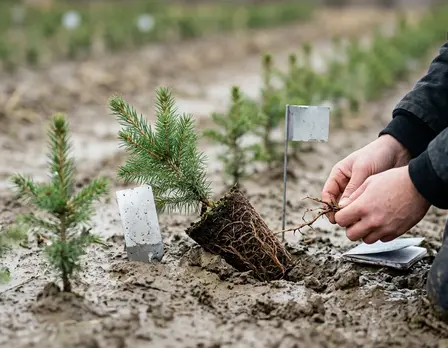
At the bottom of the wet pocket, a third plug has been jacked almost completely out of its hole by repeated ice lenses, lying at a steep tilt with its entire root cylinder exposed to the sun and wind. The needles on the leader are still as green as Seedling One. However, touching the outer roots tells the real story: they are bone-dry, stiff, and snap cleanly like dry twigs. Packing soil around a dead root system just buries a future stick and tricks you into thinking the row is fully stocked. Instead of resetting it, I tie a high-visibility flag to the leader so the replant crew knows to drop a fresh transplant here during spring planting.
Keep in mind that these three choices apply to visible frost lift in young plugs and recent transplants that have not yet anchored into native soil, rather than established, deeply rooted trees. Reseating a damp plug saves it from immediate wind desiccation, though it cannot revive roots that have already dried out, prevent another heave if the same wet spot freezes hard next week, or guarantee harvest survival years down the road. You will still want to revisit these flagged and reset patches during spring green-up to confirm which buds push new growth.
Pick the Row the Next Freeze Will Lock
A warm afternoon in early spring leaves the ground open and workable for only a brief stretch before temperatures drop again after dark. Rather than trying to tour the entire farm at once, pick your highest-risk block right now—either the ground planted last fall or that one low, slow-draining row at the bottom of the slope—and walk straight down the line while the dirt still crumbles in your hand.
Looking out at your blocks at Oney's Tree Farm & Nursery or on your own acreage today, which specific row still has plugs sitting proud of the soil, and will you check that one before the next overnight freeze locks the lift in place?