The Morning the Tree Comes Down
On a Saturday after New Year in an Illinois living room, the balsam fir still stands bolted into its reservoir base. One last glass ball sits inside an empty ceramic bowl on the coffee table. Dry needles dot the weave of the rug around the skirt, and cardboard storage boxes lie open beside the sofa while someone looks at the bare lower branches and asks where the tree goes now.
The room holds two separate tasks. Packing away the hooks and fragile heirlooms follows an established household routine, yet the woody stem and dried foliage sitting in the stand still need an exit route. With the ornament lids waiting to be taped shut, the household faces a direct choice between a planned handoff to local collection and a spent evergreen left for a landfill or a burn pile.
Treating the tree's departure as an afterthought turns a seasonal staple into bulky yard waste at the exact moment winter weather makes storage and hauling harder. Getting the conifer from the living room floor back into a regional organic loop means lining up the indoor takedown with the municipal collection schedule before the needles drop any further.
A Place for the Tree Beside the Ornament Boxes
Post-holiday removal starts before the tree ever crosses the threshold in December. When a household pulls out the light testers, inspects the tree stand threads, and sets up a daily watering schedule, the evergreen's eventual destination belongs on that same seasonal preparation list. Checking how the local collection system handles natural trees ahead of time allows the family to keep the municipal schedule right alongside the ornament-storage supplies.
When a natural conifer enters a dedicated local chipping stream, mechanical grinders reduce the trunk and branches into coarse wood chips used for mulch, path cover, or similar community material. Knowing the handoff requirements in advance makes that secondary agricultural use part of the holiday habit itself. From the field, the tree goes to the living room and then onto local trails or planting beds as protective ground cover.
Waiting until the living room is already cleared introduces a familiar bottleneck: the decorations reach storage cleanly, yet the evergreen stays propped against a garage wall or sits out at the curb after its collection window has closed. Once a dried balsam fir misses the municipal chipper run, the household is left managing a brittle, shedding stem that standard weekly trash routes may reject.
Stripping Lights, Tinsel, and the Stand
Preparing a conifer for mechanical chipping takes a step-by-step teardown that moves from electrical cordage to loose ornaments and finally to the basal hardware. Grinders and tub chippers tolerate wood, bark, and needles, while metal, glass, and plastics contaminate the resulting mulch and damage cutting knives.
- Unplug and coil the light strings: Start at the top or innermost wrap and work outward so bulbs do not snag on stiff twigs or snap off inside the crown.
- Pull tinsel strand by strand: Clear the outer tips first, then part the boughs to inspect the branch interiors where loose metallic or plastic strands settle during the month.
- Remove all ornaments and wire hooks: Sweep the interior scaffolding near the trunk as carefully as the visible outer tips to catch green wire hooks that blend into balsam fir needles.
- Detach the tree from its stand: Unscrew the eye-bolts, lift the trunk clear of the water basin, and inspect the butt end of the stem for lag screws, stabilizing nails, or attached centering pins.
Keep the stand, nails, screws, fabric tree skirt, and plastic transport bags with the household items rather than sending them out with the evergreen. Even clear polyethylene disposal bags wrapped around the base to catch indoor needles must be pulled off completely before the tree is presented at the curb or drop-off yard.
Sorting Out Non-Recyclable Trees
Not every holiday tree qualifies for the wood-chipping pile. Collection rules commonly exclude flocked trees and trees still coated in tinsel from the clean-tree stream because chemical flocking adhesives and synthetic strands cannot be separated from the ground mulch. An artificial tree, meanwhile, is a separate waste item built from polyvinyl chloride and steel frames, so it never belongs in a collection of real evergreens.
Bare Wood Only: A single hidden wire hook or a forgotten steel centering pin driven into the base of a trunk can shred chipper blades and contaminate an entire load of community path mulch.
What This Year's Pickup Actually Allows
A stripped Illinois Christmas tree is ready for handoff only when its preparation, placement, and timing match the current local notice. Because Illinois cities, villages, and counties set their own collection arrangements independently, a household must read the current notice for its own jurisdiction before choosing a Saturday or weekday morning to haul the tree outside. Standard weekly refuse service does not automatically absorb whole evergreens without specific seasonal authorization.
Reading the Local Collection Notice
- Active collection dates: Verify the exact start and end dates on the current calendar rather than assuming ordinary trash service includes Christmas trees throughout January.
- Bare-tree requirements: Confirm that all twine, wire, bagging, and structural supports are prohibited by the hauling contractor or public works crew.
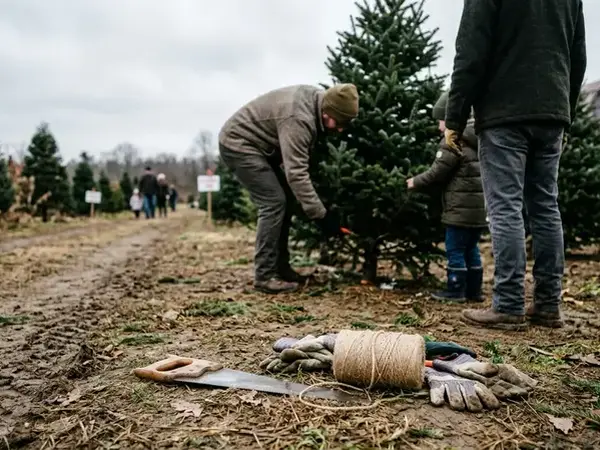
- Length and trunk-diameter limits: Check whether tall conifers or heavy basal stems must be bucked into shorter sections with a handsaw to fit hopper openings or manual lifting rules.
- Stand removal instructions: Ensure both metal basins and nailed wooden cross-bases are detached from the butt log.
- Curbside versus staffed drop-off service: Distinguish whether trucks sweep residential streets on designated days or whether residents must transport the tree to a named park yard or public works lot during specific staffed receiving hours.
If this year's notice is not posted yet, wait for it or ask the local waste office rather than reusing last year's dates. Shifting calendar days after New Year and updated winter hauling contracts often change which week the chipper trucks run through a given neighborhood.
Roadsides and Burn Piles Are Not a Plan
When a household misses the municipal pickup window, the dry conifer leaning against the garage still requires a controlled exit. Hauling a missed tree out to a forest preserve edge, a country roadside, or an unmonitored corner lot creates an immediate physical hazard rather than returning organic matter to the soil.
Leaving a tree in a park, drainage ditch, waterway, or vacant lot is dumping rather than recycling. In agricultural and suburban Illinois watersheds, discarded conifers slide into roadside swales and culvert mouths where their stiff radial branches catch corn stalks, silt, and winter trash, obstructing drainage during early spring thaws. Whole trunks abandoned on public parkland also interfere with mowing equipment and trail maintenance crews.
Fire Hazards of Dry Conifer Resin
Burning doesn't work as an improvised disposal method either. As a cut balsam fir dries indoors over several weeks, moisture leaves the conductive tissues while volatile terpenes and pitch remain concentrated in the needles and fine twigs. Those dry needles and small branches ignite and burn rapidly, creating intense heat spikes and airborne sparks that make a whole spent evergreen or its cut limbs unsuitable for an indoor fireplace or wood stove.
Outdoor burning carries similar volatility. A dry evergreen flares rapidly in an open yard pile, throwing embers well beyond the fire ring. Residents must follow local burn rules rather than treating an open pile as a fallback when curbside pickup is missed. When the listed collection window has already closed, the reliable step is to call the local waste office and ask for an authorized late-disposal option or transfer station drop-off.
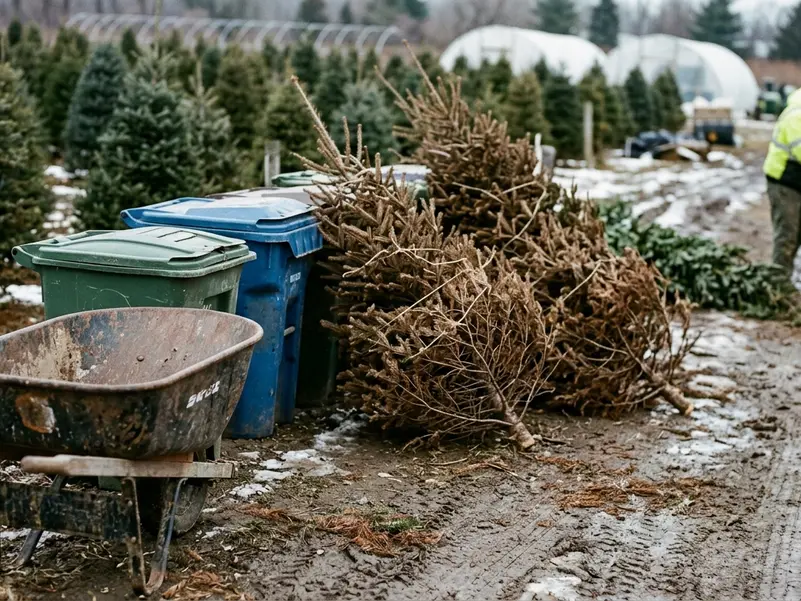
The Bare Tree at the Curb
On collection morning in that same Illinois household, the cardboard ornament boxes sit taped and shelved in the storage area, and the living room rug is swept clean of needles. The metal stand is unbolted and wiped dry, the branches are completely bare of wire hooks and light cords, and the balsam fir lies ready by the front door with no plastic bag around its trunk. One person checks the municipal notice one last time to confirm the morning window, then carries the cleaned tree out to the curb—or slides it into the back of the vehicle for the drive to the designated drop-off site during its listed receiving hours.