Will a Freestanding Burlap Screen Keep Salt Off a Young White Pine?
Will a freestanding burlap screen, set between a young white pine and a salted driveway or road, stop winter splash without wrapping the foliage? A freestanding screen positioned on the traffic side, with an open air gap before the branches, is the right setup to intercept direct tire spray while keeping the tree's crown uncovered and breathing freely.
When I look at young conifers growing near winter traffic lanes, the evergreens that hold their clean color into April are the ones shielded by a simple vertical wall of fabric that never actually touches a single needle. Swaddling a young tree in fabric traps wet salt against the shoots and bends the flexible limbs under heavy ice. Building a straight fence line between the tires throwing salty water and the pine's exposed lower crown stops the airborne droplets before they reach the foliage.
Getting a young white pine safely through the winter salting season comes down to six steps:
- How Salt Splash Marks a Young White Pine's New Growth: Reading how airborne spray and soil runoff damage low branches.
- What to Gather Before the First Salted Storm: Sizing your woven burlap, stakes, and ties before the soil locks up.
- Set the Screen on the Driveway Side, Not Around the Tree: Mapping a straight or L-shaped line parallel to the pavement.
- Stake and Tie the Burlap So Wind Cannot Slap the Needles: Driving supports and tensioning the fabric clear of the leader.
- Keep Salted Snow Piles Off the Trunk and Roots: Marking a snow-storage zone outside the tree's drip line.
- Walk the Road-Facing Needles on the First Mild Day: Comparing the driveway face to the sheltered side to fine-tune next autumn's layout.
How Salt Splash Marks a Young White Pine's New Growth
Winter road salt reaches a roadside evergreen in two ways: tires throw salty droplets directly onto the foliage, and salty meltwater runs off the pavement to soak into the soil around the roots. Because a young white pine still holds much of its live crown low to the ground, its most productive branches sit squarely inside the low splash band where passing tires kick up slush.
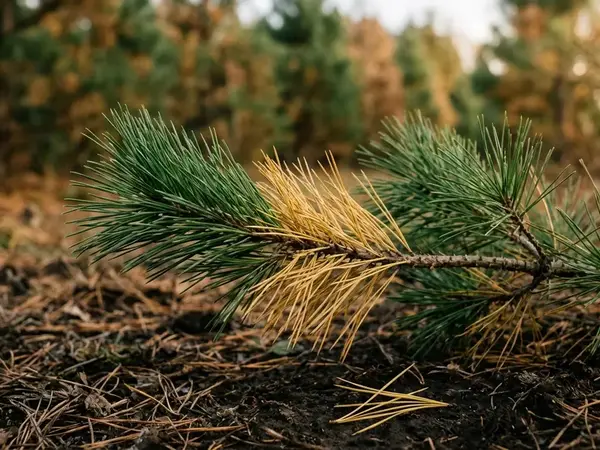
Unlike a stiff, dense balsam fir that carries heavier wax on short needles, a young white pine holds soft, fine needle bundles that catch and hold fine road mist. If you walk out to a pine that went unshielded last winter, look closely at the pavement-facing side. You will often spot needle-tip browning or deeper rust-colored dieback concentrated on the side facing the cars, including on the youngest exposed shoots, while the backyard side of the same tree remains deep green.
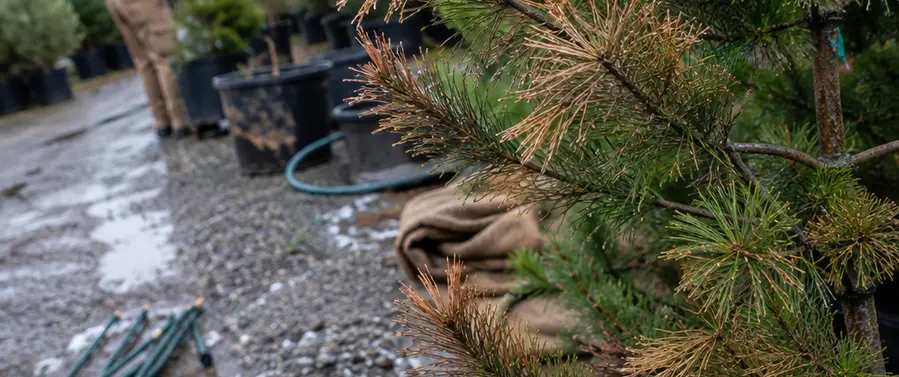
That lopsided browning is your signal to put a screen up before the next salt truck rolls by. It also explains why the screen must stand clear of the tree. Wet, salt-laden cloth touching needles prolongs contact with the brine, and salty snow packed against low branches holds contaminated moisture right against the buds.
What to Gather Before the First Salted Storm
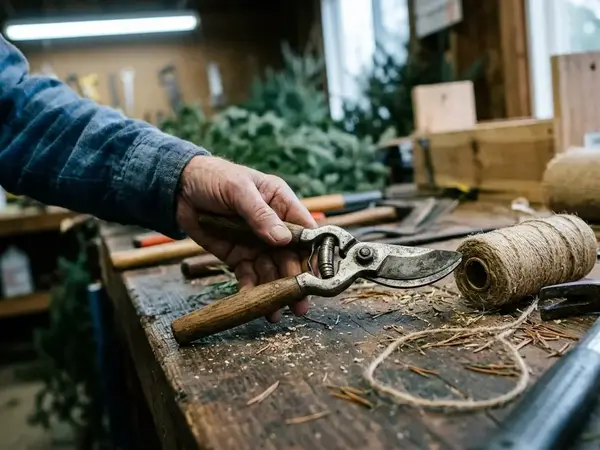
You only need a basic kit to put up a sturdy splash shield, and gathering everything in late autumn beats scrambling during an early freeze. Leave plastic tarps and non-porous sheeting in the shed; solid plastic catches the wind like a sail and tears stakes out of the dirt. Woven burlap lets wind bleed through its mesh while still catching heavy droplets of slush.
- Woven burlap roll: Cut a piece that gives you about 3 to 4 feet of panel height, which is a practical starting size for a small pine. Match that height to the splash pattern reaching your specific driveway edge. Make the panel wide enough to cover the entire exposed face of the crown, plus extra cloth at each end to wrap fully around the end stakes.
- Wooden or metal stakes: Pick sturdy posts tall enough to allow roughly 12 to 18 inches of ground penetration while still standing above the top edge of your 3-to-4-foot burlap panel.
- Twine or heavy-duty ties: Bring enough cordage or UV-stable ties to secure the fabric at multiple points along every stake.
- A heavy mallet: Handy for driving wooden or steel posts straight into chilled autumn ground without splitting the tops.
Before you drive a single post, lay the burlap out on the grass beside your planned screen line. Fold the extra cloth around the spots where your end stakes will sit, and count out your intermediate supports so you know the exact hardware count before breaking ground.
Set the Screen on the Driveway Side, Not Around the Tree
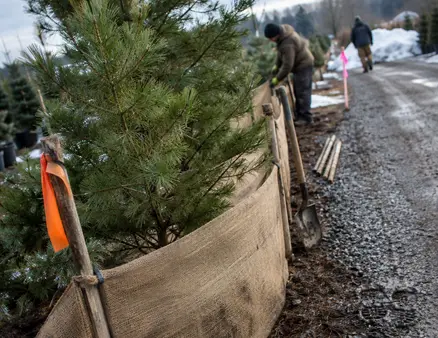
A salt screen works as a roadside shield along the pavement edge. Never wrap, tent, or circle the tree with the fabric. Walk the tire path and the snowplow route in full daylight, then mark a straight freestanding line parallel to the salted pavement between the pine and the traffic source.
Spacing determines how well the barrier holds up in January gales. Leave enough clearance between the burlap line and the tree so that wind-driven cloth cannot billow inward and touch the outermost needles. If the trunk grows close to the driveway, shift your screen line closer to the pavement edge rather than crowding the bark, making sure the stakes still sit safely outside vehicle doors and plow blade overhang.
When a young pine sits near a corner where a salted road meets a salted driveway, splash arrives from two directions. Set up an L-shaped line facing both paved edges. The two wings meet at a corner stake toward the intersection, while the back and top of the pine's crown stay completely open to sunlight and clean air.
Check Underground Lines First: Always check for buried utilities, like shallow irrigation pipes, landscape lighting wires, or telecom lines, before driving stakes 12 to 18 inches into the soil along a driveway edge, and verify that your screen height preserves clear sightlines for drivers backing out into the road.
Plan to drive your stakes before the ground freezes hard, or catch a mid-autumn thaw when the soil gives easily enough to seat every post firmly.
Stake and Tie the Burlap So Wind Cannot Slap the Needles
Loose burlap flapping in a winter gale will whip the tender buds off a white pine faster than the salt itself. Setting a drum-tight panel keeps the fabric in its lane all winter.
- Drive the supports: Space your stakes approximately 3 to 4 feet apart along your marked line. Drive each one 12 to 18 inches into the earth with your mallet until it resists a firm sideways push.
- Anchor the first end: Wrap the extra burlap around the first end stake and tie it tightly at the top, middle, and bottom of the post.
- Set the bottom gap: Hold the lower edge of the burlap panel a few inches above the soil surface. Keeping that small gap at the bottom reduces direct contact with salty slush and prevents the fabric from wicking ground moisture continuously.
- Tension the spans: Pull the cloth taut toward the next stake about 3 to 4 feet down the line. Fasten the fabric at the top, middle, and bottom of every intermediate support so the unsupported spans cannot bow inward and slap the branches.
- Verify crown clearance: Walk behind the finished screen and inspect the air gap along the entire crown-facing surface. Every fastener must attach strictly to a stake, leaving all side branches and the upright central leader completely free.
Once winter weather sets in, check the line right after the first windy storm and again after heavy wet snow loads the fabric. Brush accumulated snow gently off the burlap face and retighten any twine loops that worked loose in the wind.
Keep Salted Snow Piles Off the Trunk and Roots
The burlap line and the snow-storage line do different jobs: one intercepts tire splash before it reaches the crown; the other keeps a salty meltwater reservoir away from the pine's roots. While woven burlap cuts down on direct airborne splash, it cannot keep dissolved road salt out of the root zone if salty pavement runoff and plow berms drain directly into the planting bed.
When someone shovels a driveway or angles a plow blade toward a screen, that piled snow holds all the road salt the fabric just blocked. Packing a heavy berm against the stakes pushes salty slush through the bottom gap and against the trunk, undoing your barrier work in a single afternoon.
Choose your snow-storage spot at the same time you mark the screen line, rather than leaving that decision to a hurry in the middle of a blizzard. Mark the tree side of the screen as a strict no-dump zone. Keep all salted snow piles clear of the trunk and at least beyond the drip line (the ring of ground directly beneath the outer branch tips), remembering that the pine's fine feeder roots reach even farther out past that line. Direct plowed snow toward a spot down the drive where thawing slush drains away from the planting area.
If a tight driveway layout forces someone to drop salty snow near the pine during an active storm, go back out with a shovel once the snow stops and move that pile farther down the drive before a sunny afternoon turns it into brine. Shovel carefully near the base so you avoid scraping the topsoil or striking low brittle branches with the blade.
Walk the Road-Facing Needles on the First Mild Day
I like to evaluate a winter screen's placement on the first mild day after seasonal salting ends, using the foliage itself as a layout guide for the coming year. Untie the twine, pull the stakes, and stand on the driveway side of the pine. Look at the needles facing the pavement and compare them side-by-side with the sheltered needles growing at the same height on the backyard face of the tree.
Road-facing brown tips paired with greener sheltered needles point to winter spray exposure, even though the visual pattern alone does not prove salt was the sole trigger. By looking closely at where the color shifts in relation to where your fabric hung, you can spot how stray droplets sneaked past. Read the escape route in the needles: browning above the burlap points toward panel height, while browning beyond an end points toward screen width.
Whatever marks you find, leave browned needles in place on the tree. Never shear a young white pine to hide winter discoloration; cutting into young shoots removes live buds that are still healthy inside the needle cluster and ruins the tree's natural whorl structure.
Standing on the cold asphalt with the rolled-up burlap tucked under one arm, you roll a pinch of driveway-side needles between your thumb and forefinger and compare them against a green cluster on the sheltered side. The road-facing shoots hold the same soft green sheen from the lowest skirt branch up to the leader, and you jot the stake distances onto the shed clipboard so next November's posts drop straight into the same clean line.